
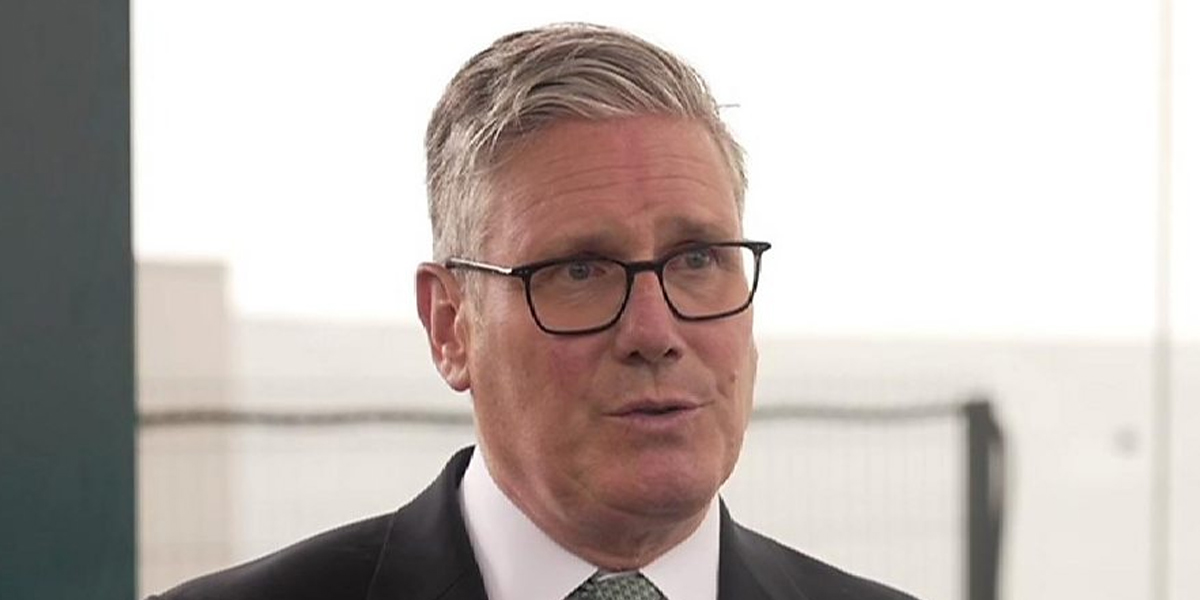
Prime Minister Sir Keir Starmer has confirmed for the first time that the government is actively considering the introduction of a digital ID system as part of its strategy to tackle illegal immigration.
Speaking to BBC political editor Chris Mason, Sir Keir said a modern identity scheme could play an “important part” in reducing the incentive for migrants to enter the UK without permission. He noted that “we all carry a lot more digital ID now than we did twenty years ago, and I think that psychologically, it plays a different part.”
When asked whether a digital identity scheme could make the UK less attractive to those entering illegally, Sir Keir added: “My instinct is it can play an important part. Obviously we need to look through some of the detail.” He suggested that, two decades after the row over physical ID cards, the public would likely “look differently” at a digital-based system. However, he did not confirm whether such a scheme would be mandatory.
The Labour government under Tony Blair first introduced ID cards, but the scheme was scrapped in 2011 by the Conservative-Liberal Democrat coalition over privacy concerns, with around 15,000 cards in circulation at the time.
Officials are now believed to be exploring whether requiring a digital ID could offer a more consistent way of verifying identity, help reduce the use of fake documents, and support stronger enforcement against illegal work.
Since 2022, employers have been able to use certified digital verification services to confirm the right to work for passport-holding British and Irish citizens. The Home Office also provides an online system to verify the status of certain non-British and non-Irish nationals whose immigration records are held electronically.
Cabinet Office minister Pat McFadden recently visited Estonia to review the Baltic state’s digital identity programme, which allows citizens to access a wide range of public and private services including banking, voting, and healthcare.
The debate over digital identity has resurfaced in the wake of ongoing concerns about illegal immigration. In July, French President Emmanuel Macron revealed that the UK had committed to address the “fight against illegal work” as part of broader measures to tackle irregular migration.
Sanctions for employing illegal workers in the UK include fines of up to £60,000 per unauthorised worker. Responsibility lies with employers, and in the case of agency workers, with the agencies themselves.
Earlier this year, the government announced new rules extending right-to-work checks to self-employed contractors hired by companies, aiming to close loopholes in sectors such as the gig economy. Home Secretary Yvette Cooper said the change would strengthen enforcement in industries where temporary and casual labour is widespread.
