
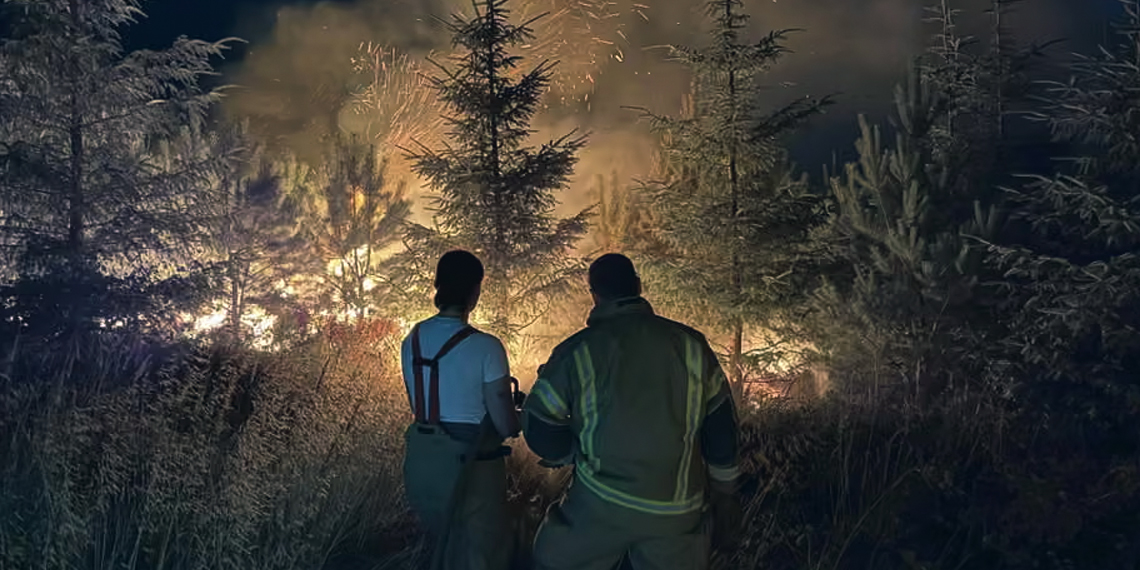
The UK is facing an unprecedented wildfire season in 2025, with firefighters warning the country is on track to surpass the national record for blazes. Frontline crews say they are being “pushed to their limits” as hot, dry weather drives a surge in incidents across the country.
A major incident was declared this week in the North York Moors national park, where 20 fire engines have been battling at least 5 sq km of burning moorland since Monday. It follows a major weekend blaze handled by Dorset and Wiltshire Fire Service, as well as a fire at Arthur’s Seat in Edinburgh.
According to the National Fire Chiefs Council (NFCC), England and Wales have already recorded 856 wildfires this year — one-third higher than the record-breaking total in 2022, and six times more than in 2024. With weeks of hot, dry conditions expected, the NFCC warns the number is likely to climb further.
The NFCC has urged the public to avoid lighting barbecues in open countryside, parks, and moorland areas, and to refrain from discarding cigarettes, matches, or glass bottles that could spark fires in dry vegetation.
NFCC chair Phil Garrigan said firefighters are “already being pushed to their limits,” stressing that wildfires can take days or even weeks to control, diverting crews and specialist equipment from other essential rescue work. “We are seeing more wildfires than at this point in 2022 – itself a record year – and that is deeply concerning,” he said.
Garrigan highlighted the impact of climate change, warning that wildfires are no longer just a seasonal problem but a “persistent and growing risk to life, property, and the environment.” He also called for long-term investment to reverse cuts to staffing and resources, noting that England has 11,000 fewer firefighters than a decade ago despite a 20% rise in demand.
Meanwhile, researchers have warned that sea temperatures off the Yorkshire coast are on track to break records in 2025. The North Sea is now 2°C warmer than in the 1980s, threatening key species in the marine food chain. Professor Rodney Forster of the University of Hull said the region “appears to be a bit of a hot spot, warming faster than anywhere else” — though the cause is still unknown.
