
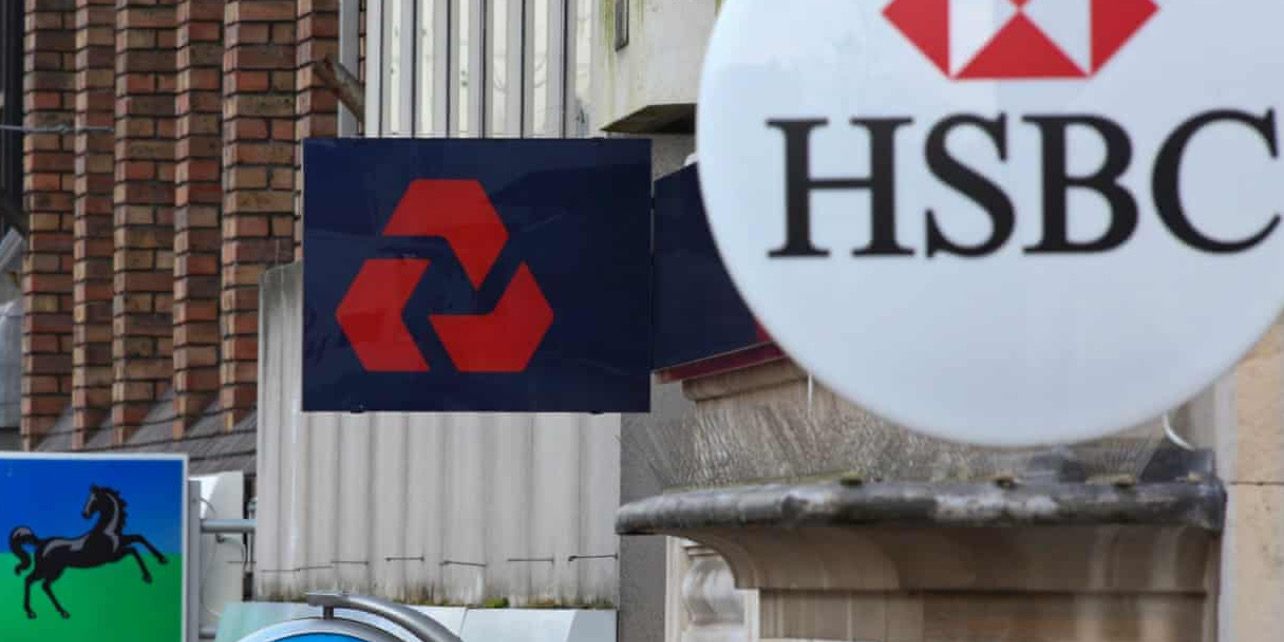
UK bank shares slumped on Friday, wiping almost £8bn off the sector’s market value in morning trading, after fresh calls for a windfall tax on major lenders spooked investors ahead of the autumn budget.
The pressure came from a new report by the Institute for Public Policy Research (IPPR), which urged the government to impose a tax on large banks to recover what it described as “windfalls” gained from post-crisis economic measures.
NatWest Group saw the sharpest fall, with shares plunging as much as 5% in early trading. Lloyds Banking Group dropped 4.5%, Barclays slid 3.6%, and HSBC was down more than 1%. The combined losses reduced the notional value of the UK’s largest banks by £7.9bn within hours of the markets opening.
Speculation is mounting over potential tax hikes in the upcoming budget. Proposals have included levies on banks, property, and landlords’ rental income, as Chancellor Rachel Reeves looks to plug a reported £40bn gap in the public finances.
The IPPR argued that lenders benefited significantly from quantitative easing (QE), an emergency economic policy introduced after the 2008 financial crisis. Under QE, the Bank of England bought £895bn worth of bonds from banks, crediting them with reserves at the central bank. These reserves accrued interest at the Bank’s base rate, currently 4%.
Although QE is now being unwound in a process known as quantitative tightening, the Bank of England is paying higher interest on banks’ reserves than it receives from its bond holdings. The IPPR estimates this has created a £22bn annual loss for the Treasury.
To address the shortfall, the thinktank recommended a levy modelled on a tax introduced by Margaret Thatcher in 1981. The report stated that such a measure would “recoup some of these windfalls and put the money to far better use, helping people and the economy, not just bank balance sheets”.
Market experts, however, warned of the risks. Neil Wilson, chief market strategist at Saxo Markets, said banks were “easy pickings politically” but questioned whether such a move aligned with Labour’s pro-growth agenda. “Does it chime with a pro-growth agenda if you constrain their ability to create new [money] by lending?” he asked.
Richard Hunter, head of markets at Interactive Investor, also cautioned that even the suggestion of a windfall tax could spook investors further. He said any proposal was “likely to have an exaggerated impact given the government’s obvious need to raise more income in an attempt to mitigate its financial difficulties”.