
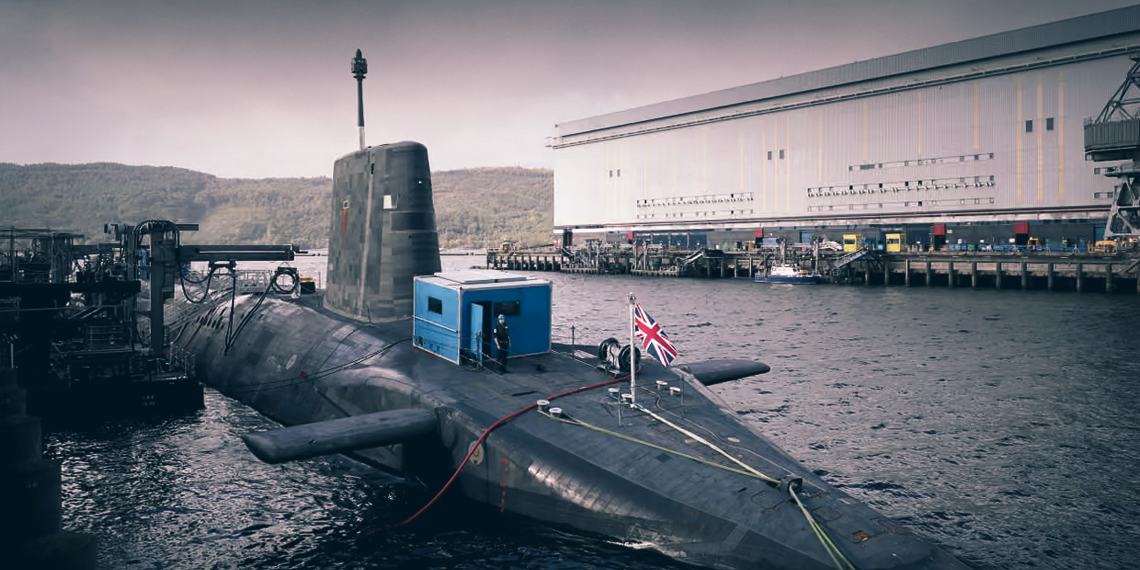
Newly released documents show that radioactive water from the UK’s nuclear weapons base at Coulport in western Scotland leaked into the sea following repeated pipe bursts caused by poor maintenance.
The armaments depot at Coulport, situated on Loch Long near Glasgow, stores the Royal Navy’s nuclear warheads for its fleet of Trident submarines based at nearby Faslane. The Scottish Environment Protection Agency (SEPA) found that the Royal Navy failed to maintain a network of 1,500 ageing water pipes, with up to half of the site’s components beyond their design life at the time of the incidents.
According to SEPA’s inspection files, the flooding was due to “shortfalls in maintenance” and led to the release of “unnecessary radioactive waste” in the form of low levels of tritium — a radioactive isotope used in nuclear warheads. One major leak in August 2019 saw significant amounts of water flood a nuclear weapons processing area, contaminate with tritium, and flow into Loch Long via an open drain.
While SEPA confirmed the radiation levels were too low to endanger human health, it highlighted failures in asset management and delayed action to replace old infrastructure. Plans to replace all 1,500 at-risk pipes were described as “sub-optimal”.
The leaks were uncovered through confidential inspection reports and emails obtained by investigative website The Ferret and shared with The Guardian, following a six-year legal fight under Scotland’s freedom of information laws. David Hamilton, the Scottish Information Commissioner, ordered the release of most of the files in June 2024, ruling that they threatened “reputations” rather than national security.
The Ministry of Defence (MoD) had fought to keep the documents secret, citing security concerns, and delayed their release further in August to review “additional national security considerations.”
SEPA’s records show multiple incidents: one pipe burst in 2010, two more in 2019, and two further bursts in 2021 — one in an area storing radioactive substances. After the 2019 incident, the MoD pledged 23 remedial actions, but progress was “slow and delayed in many cases”, according to a 2022 inspection.
David Cullen, a nuclear weapons expert at the BASIC think tank, described the incidents as “shocking” and the secrecy as “outrageous”, noting that despite a £2 billion infrastructure programme, proper asset management was still lacking as recently as 2022.
Although Coulport is exempt from civilian pollution laws due to its military status, SEPA aims to hold it to equivalent environmental standards. The agency says both Coulport and Faslane have since made “substantial improvements” in maintenance and asset management, and no similar incidents have been reported.
The MoD insists there have been “no unsafe releases of radioactive material into the environment” and maintains that it places “the utmost importance” on safely managing radioactive substances.
Annual public data on radioactive discharges from both bases continues to be published, with SEPA stating that current levels are “of no regulatory concern.”
