
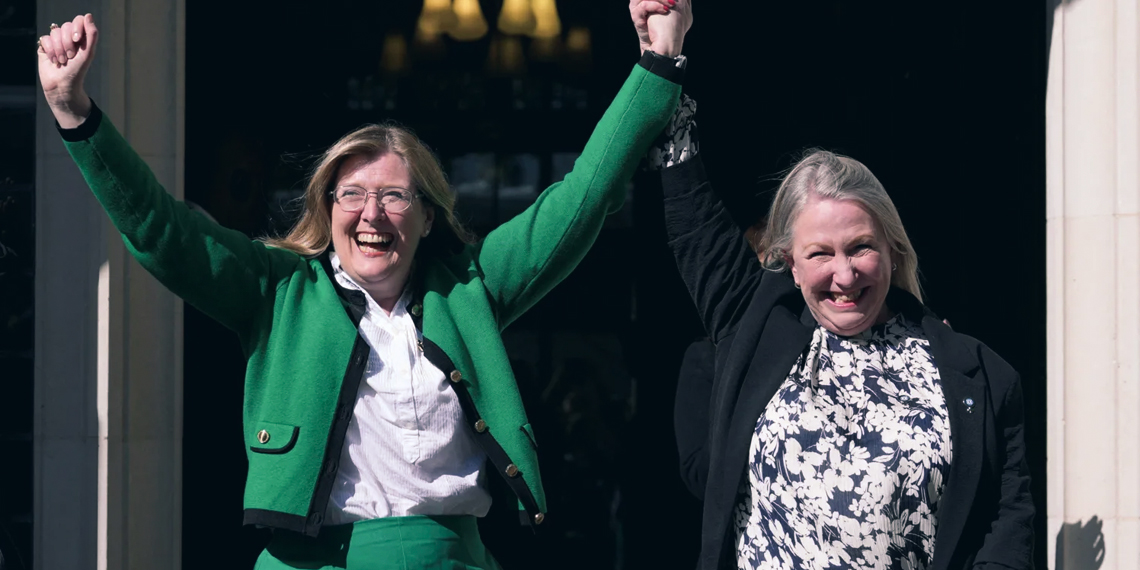
Campaigners behind a landmark legal ruling on the definition of a woman have launched fresh legal action against the Scottish government, claiming current policies on transgender people in schools and prisons breach Supreme Court guidance.
For Women Scotland has filed a case at the Court of Session, arguing that existing rules remain “inconsistent” with the Supreme Court’s April judgement on the Equality Act 2010. That ruling confirmed that “woman” and “sex” refer specifically to biological women and biological sex under the law.
The group says guidance allowing transgender pupils to use facilities based on their gender identity, and rules permitting transgender women into female prisons under certain conditions, directly contradict the court’s findings.
School and prison guidance under scrutiny
Current Scottish government guidance for schools states that pupils should, “where possible,” use the facilities they feel most comfortable with. In prisons, transgender women may be housed in the women’s estate if they do not meet violence criteria and are not deemed to pose an “unacceptable risk” to others.
For Women Scotland insists both policies are unlawful and has raised an action for reduction—meaning they are seeking to quash the guidelines entirely.
Campaigners cite risks to women and girls
The campaign group argued that leaving the policies in place causes harm to “vulnerable women and girls.” They are asking the court for a declarator ruling the guidance unlawful and for both policies to be suspended while the case is heard.
The Scottish government has 21 days to respond but declined to comment, citing ongoing legal proceedings.
Supreme Court ruling reshapes equality law
The legal dispute stems from a case brought by For Women Scotland, which challenged the government’s interpretation of the Equality Act 2010. The campaigners argued that “woman” refers exclusively to those born female, meaning sex-based protections apply only to in biological women.
Scottish ministers argued that transgender people with a Gender Recognition Certificate (GRC) were entitled to equal protections. The Supreme Court unanimously disagreed, ruling in favour of For Women Scotland.
While the Equality Act continues to protect transgender people through the characteristic of gender reassignment, the ruling forces public bodies to reassess policies on single-sex spaces such as toilets, changing rooms, and hospital wards.
The Scottish Parliament has already adjusted its facilities by introducing designated male and female toilets while retaining some gender-neutral options. Other public institutions are still reviewing their policies.
