
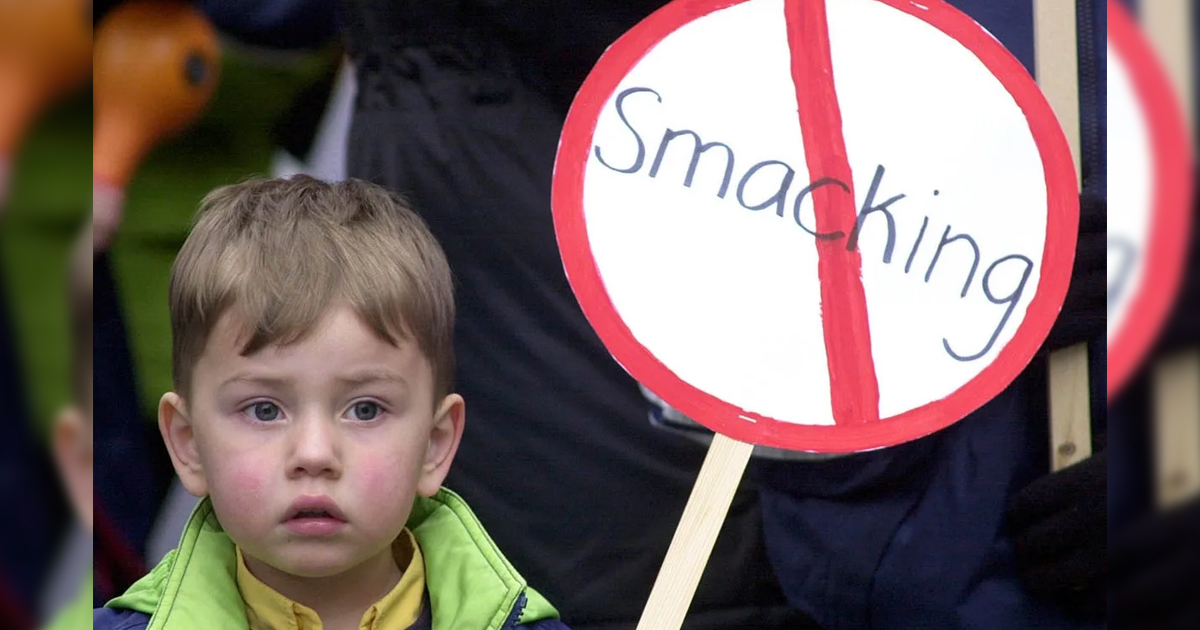
Campaigners are urging the government to introduce a full ban on the smacking of children in England, warning that outdated laws leave young people unprotected compared to those in Scotland and Wales.
Corporal punishment, including smacking, slapping, hitting and shaking, was made illegal in Scotland in 2020 and in Wales in 2022. However, in England and Northern Ireland, the law still permits parents to use “reasonable punishment” under the Children Act 2004, a defence that is judged case by case.
New polling commissioned by the NSPCC and carried out by YouGov shows public support for reform is rising, especially among younger generations. Eight in ten people aged 18 to 24 (82 per cent) said they now believe any use of force against children is unacceptable, up from 64 per cent in 2023. Among parents, support remains strong, with 81 per cent saying they oppose physical punishment. Across all adults surveyed, 71 per cent said smacking and similar punishments are unacceptable, compared with 67 per cent last year.
The survey of 3,800 adults included 749 parents of under-18s and 198 respondents aged 18 to 24.
NSPCC chief executive Chris Sherwood said, “Parents and young people are telling us loud and clear that they don’t want physical punishment to be a part of anyone’s childhood. Parents know their children and what works best for them. It is therefore crucial their experiences and opinions are not ignored or undermined, but act as a wake-up call. As parliamentarians continue to debate the Children’s Wellbeing and Schools Bill, we urge them to change the law to better reflect public attitudes to violence against children and ensure no childhood has to be tainted by physical punishment again.”
Leading health experts have echoed this call, stressing that decades of research show the damaging effects of smacking. Professor Andrew Rowland of the Royal College of Paediatrics and Child Health said, “This latest research makes it clear that physical punishment has no place in modern parenting. Health professionals stand firmly with parents and young people in recognising that physical punishment is not only outdated and unjust, but also harmful to children’s health and wellbeing. We urge the government to listen to parents, young people, health professionals and the wider public and to finally remove the outdated and unfair ‘reasonable punishment’ defence.”
Children’s charities have also highlighted the risks. Lynn Perry, chief executive of Barnardo’s, said, “Violence against children is unacceptable – and yet children continue to have less legal protection against physical assault than adults. That cannot be right. This new data shows that most parents agree. Physical punishment like smacking is harmful to a child’s health and development, and there’s strong evidence that it influences their attitudes toward violence. We have long campaigned for a change in the law to give children equal protection from assault and continue to call for action. It’s time for all children to be legally protected from all physical punishment everywhere in the UK.”
Despite growing pressure, the government has resisted calls for immediate legislation. A Department for Education spokesperson said, “The landmark Children’s Wellbeing and Schools Bill, a key part of our plan for change, represents the most transformative piece of child protection legislation in a generation, including wholesale reform of the children’s social care system and better information sharing between education, health, and social workers to stop vulnerable children falling through the cracks. While we are looking closely at the legal changes made in Wales and Scotland in relation to smacking, we have no plans to legislate at this stage.”
Some parliamentarians continue to oppose a ban. Conservative peer Lord Jackson of Peterborough argued earlier this year that outlawing smacking would be “disproportionate and heavy-handed”, warning it could “criminalise good and caring parents” and overload children’s services.
However, in the wake of tragic cases such as the murder of 10-year-old Sara Sharif in 2023, children’s commissioners have branded the current law “outdated and morally repugnant”, calling for full protection for every child in the UK.
