
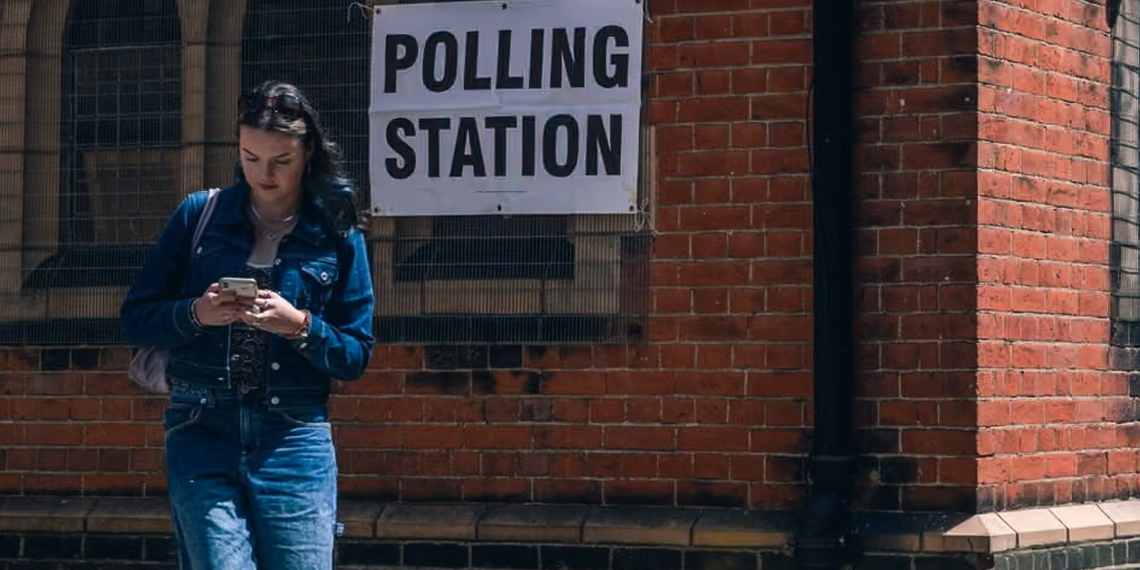
The UK government has announced a sweeping electoral reform that will lower the voting age to 16 by the time of the next general election, fulfilling a major pledge in the Labour Party manifesto. This decision brings England and Northern Ireland in line with Scotland and Wales, where 16- and 17-year-olds already vote in devolved and local elections.
The move aims to enhance fairness and inclusion in the democratic process, as many young people already contribute to society through work and military service. Deputy Prime Minister Angela Rayner stated the reforms will “break down barriers to participation” and restore public trust in the UK’s democratic institutions.
Expanded Voter ID and Modernised Registration
As part of a broader set of reforms, the government will also expand the list of acceptable voter ID documents to include bank cards and veterans’ ID cards. This change is intended to make it easier for more people to access the ballot box.
Additionally, the UK will adopt an “increasingly automated voter registration system,” simplifying the process and reducing the need to repeatedly input personal information across various public services. However, fully automatic registration is not part of the current plan.
Stronger Protections Against Foreign Influence and Political Abuse
In response to growing concerns about foreign interference and illicit political funding, the government will introduce new measures to prevent overseas influence in UK elections. This includes:
• Closing loopholes that allow foreign donations through shell companies
• Requiring political donors to prove UK or Irish income
• Imposing fines of up to £500,000 for violations
• Making false or misleading donation declarations a criminal offence
Political parties will also be mandated to perform enhanced “know your donor” checks, with new Electoral Commission guidance to assess the legitimacy of donations.
Safeguards for Candidates and Electoral Staff
The reforms also strengthen protections for candidates, campaigners, and electoral workers. New legal measures will:
• Remove the requirement for candidates to disclose home addresses on public materials
• Make harassment or abuse of election workers an aggravating legal factor
• Bar individuals convicted of such offences from standing as candidates in future elections
These reforms align with long-standing recommendations from the Electoral Commission and the Committee on Standards in Public Life to increase electoral transparency and integrity.
Deputy Prime Minister Rayner added, “We cannot take our democracy for granted. By protecting elections and empowering young voters, we are securing a stronger, fairer society.”