
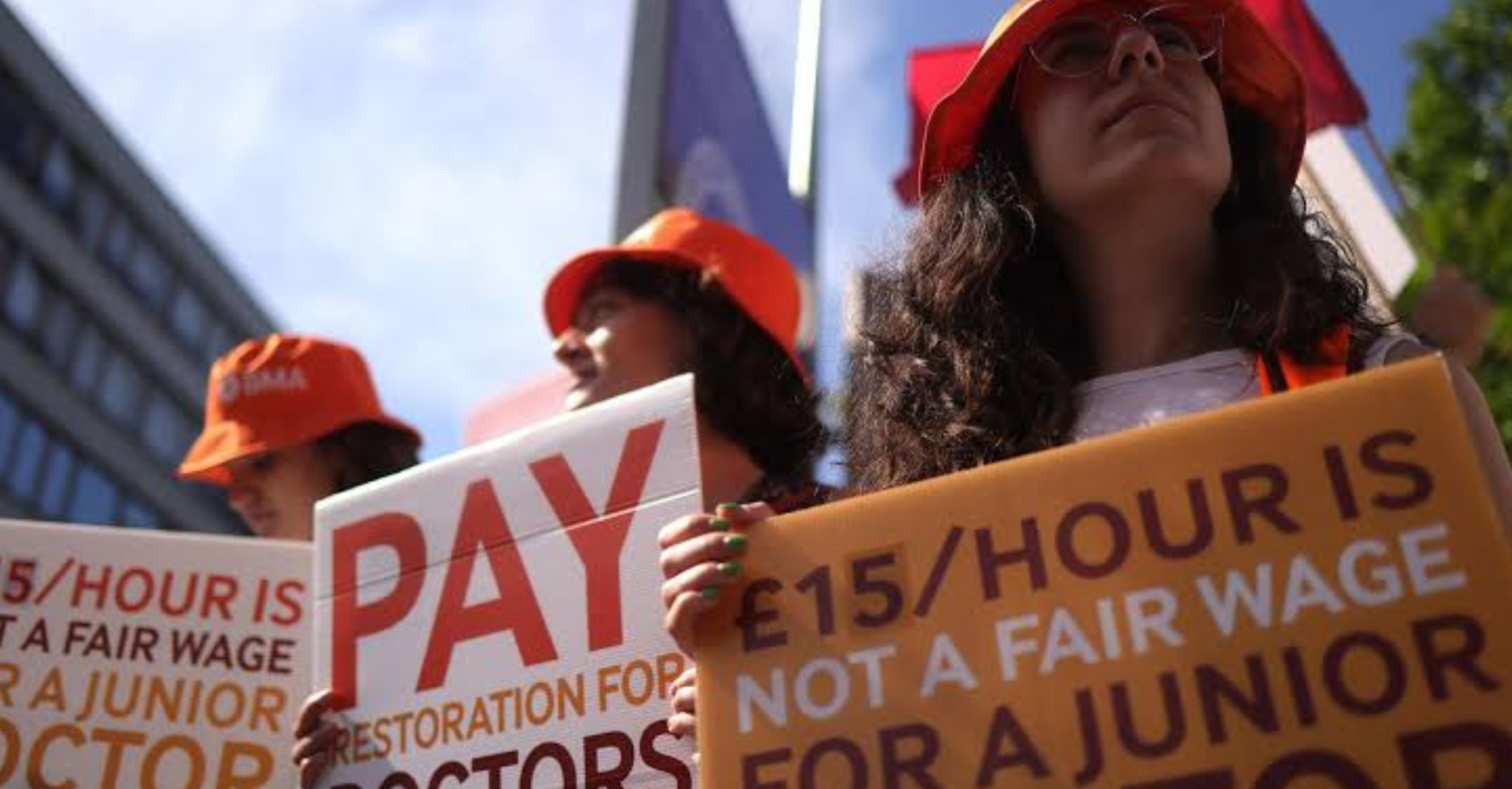
Patients across the UK may face disruptions in healthcare services until Christmas as the junior doctors strike shows no signs of resolution, according to NHS officials.
The walkout, which began Friday, entered its third day on Sunday as junior doctors continue their five-day strike over pay disputes. NHS leaders are warning the public to prepare for months of potential disruption, with fresh strikes anticipated well into the winter.
David Probert, Chief Executive of University College London Hospitals and Deputy CEO of NHS England, stated that the situation may stretch “until Christmas or maybe beyond,” due to the lack of progress in recent negotiations between the Department of Health and the British Medical Association (BMA).
Strike Mandate Valid Until January
Junior doctors are operating under a strike mandate valid until 6 January. However, BMA officials hinted that walkouts could become more frequent in the autumn.
Additional pressure is mounting as consultants and specialty doctors have been sent indicative strike ballots. They rejected the government’s latest pay offer of 4 percent, calling it “an insult.” The voting closes on 1 September.
Ambulance staff and other hospital workers may also join the industrial action. The GMB union announced that 67% of its members voted against a 3.6 percent pay offer. Meanwhile, the Royal College of Nursing is expected to release its ballot results soon.
NHS Leadership Fears ‘Snowball Effect’
NHS England Chief Executive Sir Jim Mackey expressed concern over the long-term impact of continued strikes. He said, “We know that continued disruption over the coming months could see a snowball effect for patients and for staff.”
Efforts to reduce hospital waiting times and tackle backlogs could be derailed if the strikes persist. Mackey emphasized that it has taken “a huge effort” over the past year to regain momentum on healthcare delivery.
Legal Threats Over Locum Restrictions
Tensions escalated after the government suggested it may curb doctors’ access to locum shifts during strike periods. The BMA’s Council Chair, Tom Dolphin, said the union is seeking legal counsel regarding this move, which could significantly impact doctors’ incomes.
Pay Demands vs Government Offers
Junior doctors are demanding a 26% pay increase to offset what they call a “real-terms cut” since 2008. The government insists it has already addressed the issue by offering a 28.7% increase over three years, but medics argue that inflation has eroded those gains.
Public Support for Strikes Declining
A recent YouGov poll indicates that public support for the junior doctors strike is slipping. Just 34% of respondents expressed support, compared to 59% in March 2023. A majority of 52% now oppose the strikes.
As the dispute continues, both NHS leaders and patients are left bracing for a difficult winter in the UK healthcare system.
