
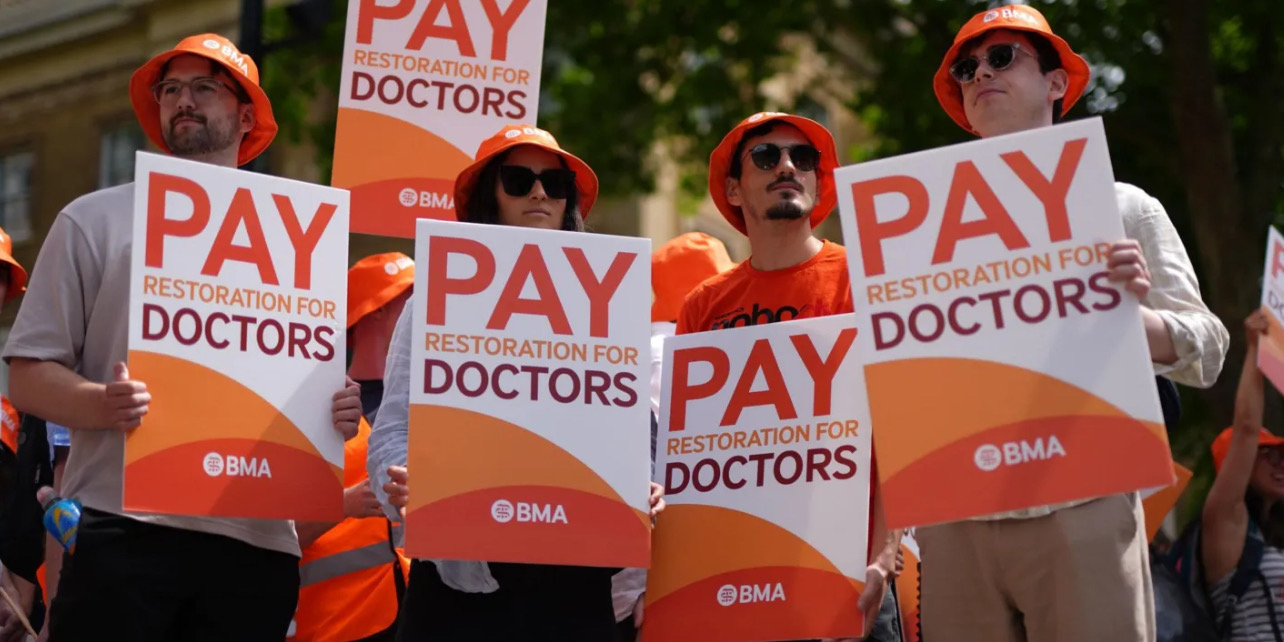
A five-day NHS junior doctors strike is set to begin at 07:00 BST on Friday across England, raising serious concerns about patient safety and healthcare costs.
Professor Tim Briggs, national director at NHS England and a key figure in strike negotiations with the British Medical Association (BMA), warned that the strike is “not acceptable” due to the damage it will inflict on patients. While supporting the right to strike, Briggs emphasized that such action should never endanger patient wellbeing.
Despite efforts by NHS England to continue non-urgent procedures like knee and hip operations during the strike, Briggs is worried about the overall strain on both emergency and elective care. “You cannot decouple elective and emergency care,” he said, citing examples of patients suffering physically and mentally due to postponed treatments.
Disagreement on Patient Safety and Service Cuts
The BMA, however, believes NHS England’s decision to maintain non-urgent care during the strike is unsafe. The union insists that scaling back routine procedures would better protect emergency services.
This walkout marks the 12th round of industrial action by resident doctors (formerly junior doctors) in an ongoing pay dispute. The strikes have already caused more than one million cancelled treatments and appointments.
Dr Tom Dolphin, a senior BMA leader, expressed regret that strikes had become necessary, attributing them to the government’s failure to restore the real-term value of doctors’ pay. Talks broke down earlier this week after the government rejected a proposal to help resident doctors with student loan relief and other financial burdens.
Rising Costs of Strike Cover Trigger Alarm
In addition to concerns about patient harm, NHS leaders are also alarmed by the cost of staffing during the strike. Daniel Elkeles of NHS Providers described the situation as a “crushing blow,” warning that inflated shift rates recommended by the BMA could overwhelm NHS budgets.
The BMA has encouraged senior doctors to demand premium rates to cover for striking residents, with consultants reportedly charging over £300 per hour for night shifts — more than triple their standard pay. The union says these rates are necessary to incentivize senior staff to take on additional shifts.
Despite an average 5.4% pay rise awarded this year — following over 20% increases across the past two years — resident doctors argue that their compensation still fails to reflect the true value of their work and training.
The government remains firm in its position, with Health Secretary Wes Streeting refusing to revisit the current pay deal.
