
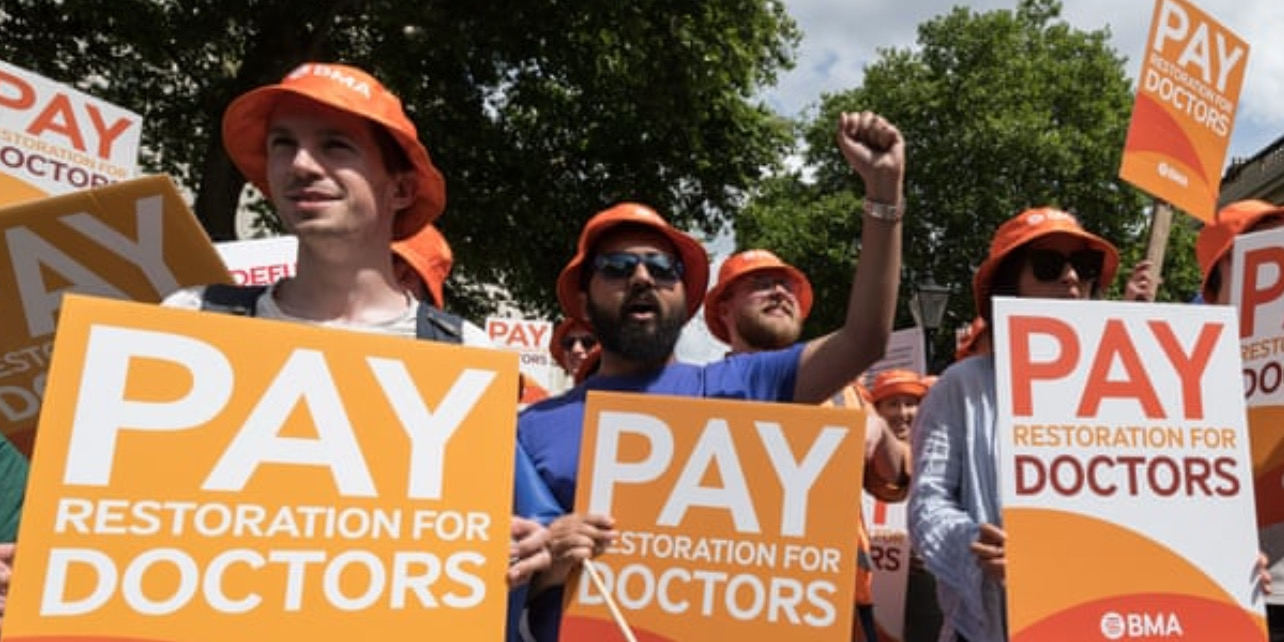
Hospitals across England are bracing for fresh disruption as tens of thousands of resident doctors prepare to strike, should their ongoing pay dispute with the government escalate.
The British Medical Association (BMA) is currently balloting over 55,000 doctors-in-training – formerly known as junior doctors – with results expected Tuesday.
If the vote returns a majority in favour of industrial action, the NHS could see up to six months of strikes, stretching into January 2026, seriously jeopardising efforts to reduce the record backlog of appointments and surgeries.
NHS Leaders Warn of Widespread Disruption
Senior NHS officials fear a repeat of the chaos seen between March 2023 and July 2024, when junior doctor strikes led to the cancellation of hundreds of thousands of procedures.
Despite a 22% pay increase granted last year, the current 5.4% pay offer for 2025 – the highest across the public sector – has been branded “derisory” by the BMA.
The association is demanding a 29% uplift to restore the real-terms value of doctors’ pay to 2008 levels, citing a 23% drop due to inflation and wage stagnation.
Danny Mortimer, Chief Executive of NHS Employers, warned: “More industrial action will mean yet more cancelled operations and appointments – leaving patients in pain, frustration and limbo. It would be deeply concerning to see strikes resume after one of the largest public sector pay rises in recent history.”
Government Urged to Avert Further Crisis
Health Secretary Wes Streeting has appealed to doctors to avoid further walkouts, stressing the impact prolonged strikes would have on NHS recovery plans. Writing in The Times, he said:
“We cannot afford to return to a constant cycle of strikes and cancellations. Patients deserve better.”
The government’s flagship 10-year health plan, which promises to cut bureaucracy and boost efficiency using technology, could be seriously undermined if long-term industrial action goes ahead.
BMA: Doctors Still “Angry and Determined”
Dr Ross Nieuwoudt and Dr Melissa Ryan, co-chairs of the BMA’s resident doctors committee, have publicly backed strike action, claiming many members are “excited” to take a stand again.
“Doctors are still angry and demanding change. By voting yes, they send a clear message that pay restoration cannot wait.”
The BMA argues that only a substantial, long-term pay rise will help retain staff, boost morale, and ensure the NHS can remain sustainable.
Call for Urgent Resolution
Rachel Power, Chief Executive of the Patients Association, voiced support for workers’ rights but urged both sides to find a solution swiftly:
“With the NHS in urgent need of reform and public trust at stake, prolonged strikes are not the answer. We need immediate, meaningful dialogue.”
Daniel Elkeles of NHS Providers echoed the sentiment, noting that repeated walkouts would divert NHS trusts from focusing on patient care and long-term service improvement.
A spokesperson from the Department of Health and Social Care confirmed that the government had engaged with doctors’ representatives from day one:
“We are committed to improving conditions for resident doctors. Over the past three years, they’ve received a cumulative pay rise of 28.9%. The Secretary of State remains open to constructive dialogue to avoid strike action and ensure patients receive the care they need.”
