
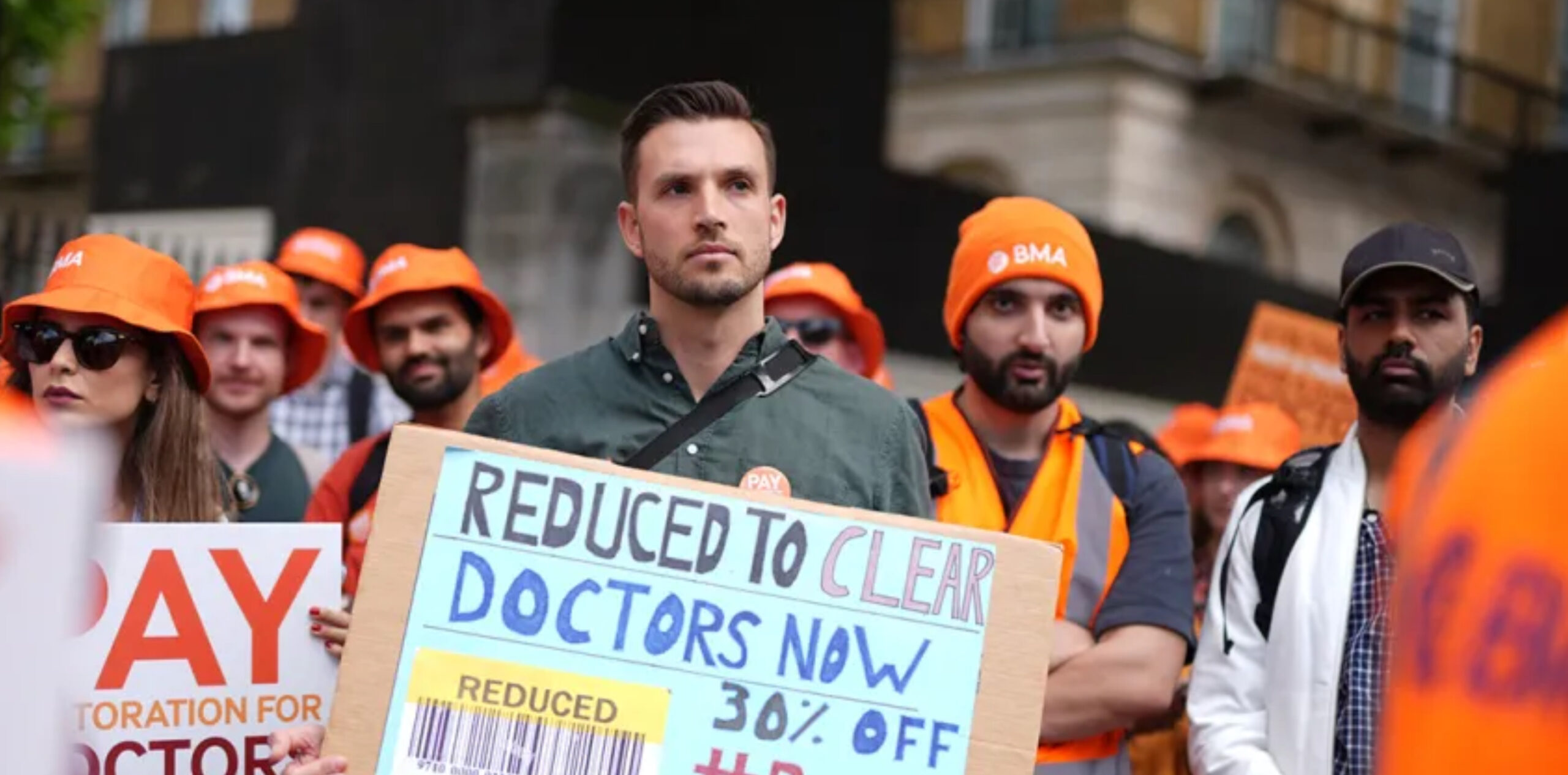
The NHS in England is preparing for the possibility of hundreds of thousands of cancelled appointments and operations as the British Medical Association’s (BMA) junior doctors’ strike ballot concludes.
If the majority of BMA members vote in favour, industrial action could span six months, beginning this month and lasting into winter, potentially continuing until January 2026.
The ballot was triggered after Health Secretary Wes Streeting offered junior doctors a 5.4% pay increase for the year. However, the BMA labelled the offer as inadequate, calling it a “derisory” response to their demand for full pay restoration. The union argues that junior doctors have faced a real-terms pay cut of 23% since 2008, and are seeking a 29% rise over the coming years to close that gap.
Dr Ross Nieuwoudt, co-chair of the BMA’s junior doctors committee, indicated at the union’s annual conference last month that the majority of members support renewed strike action.
If strikes are approved, the NHS could see severe disruption. Danny Mortimer, chief executive of NHS Employers, warned that another round of walkouts could lead to the cancellation of tens of thousands – or even hundreds of thousands – of operations and consultations, further straining the health service and prolonging patient suffering.
The Department of Health and Social Care has expressed its willingness to engage with unions to avoid further disruption. It highlighted that junior doctors have received a cumulative 28.9% pay rise over the past three years as part of wider efforts to improve working conditions.
Despite this, tensions remain high, and NHS leaders are bracing for the impact of a fresh wave of strikes during one of the most critical periods for healthcare delivery.
