
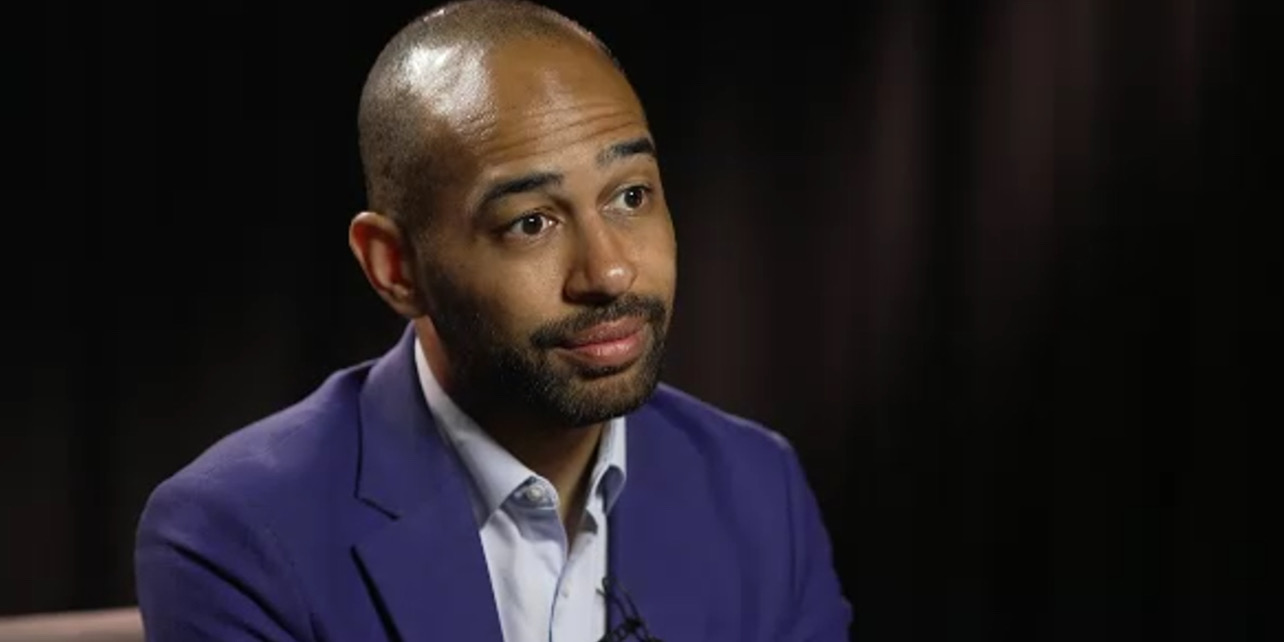
An MP, who had long vowed never to discuss the abuse he endured as a child, has now courageously shared his heart-wrenching story in the hope that “no child will have to experience what I went through”.
Josh Babarinde, representing Eastbourne and serving as the Liberal Democrats’ justice spokesperson, revealed that from the age of four, he was subjected to physical abuse by his mother’s former partner.
He recalls the painful nights of crying himself to sleep, “hearing shouts, hearing screams, and objects smashing”.
Babarinde explains that this traumatic upbringing led him to become hypervigilant, feeling a sense of safety at school, but constantly walking on eggshells at home.
His harrowing experiences, he says, have deeply influenced his political beliefs. He is now calling for the government to ensure that abusers do not “slip through the net” and are not released from prison prematurely.
Opening up about his painful past in his twenties was not easy, but looking back, Babarinde expresses immense pride in the resilience he displayed as a child. He recently stumbled upon his childhood diary, which contained drawings of Star Wars characters alongside a chilling entry he had written from the bathroom.
In one entry, he had penned: “I’m really going to try to go (to the toilet), but I can’t. Oh my goodness, I’m going to be in so much trouble; I’m going to get smacked so hard.” Just moments later, he added: “I still haven’t done anything, I’m going to be in so much trouble.”
The diary entry, Babarinde says, brought back the overwhelming sense of helplessness he felt as a child. “It was mortifying,” he admits. “An abuser strips you of your sense of self-worth.”
Now 32, the MP is calling for a change in the law to categorise domestic abuse as a distinct criminal offence.
He argues that this would prevent abusers from disguising their actions under other charges, such as assault. Furthermore, he criticises the Ministry of Justice’s early release scheme, which has allowed thousands of prisoners to be released early to ease prison overcrowding.
Babarinde asserts that this scheme has failed to exclude domestic abusers, despite government assurances.
Without formal categorisation of offenders, it remains impossible to know how many domestic abusers are currently incarcerated, leaving the door open for such offenders to “slip through the net”.
