
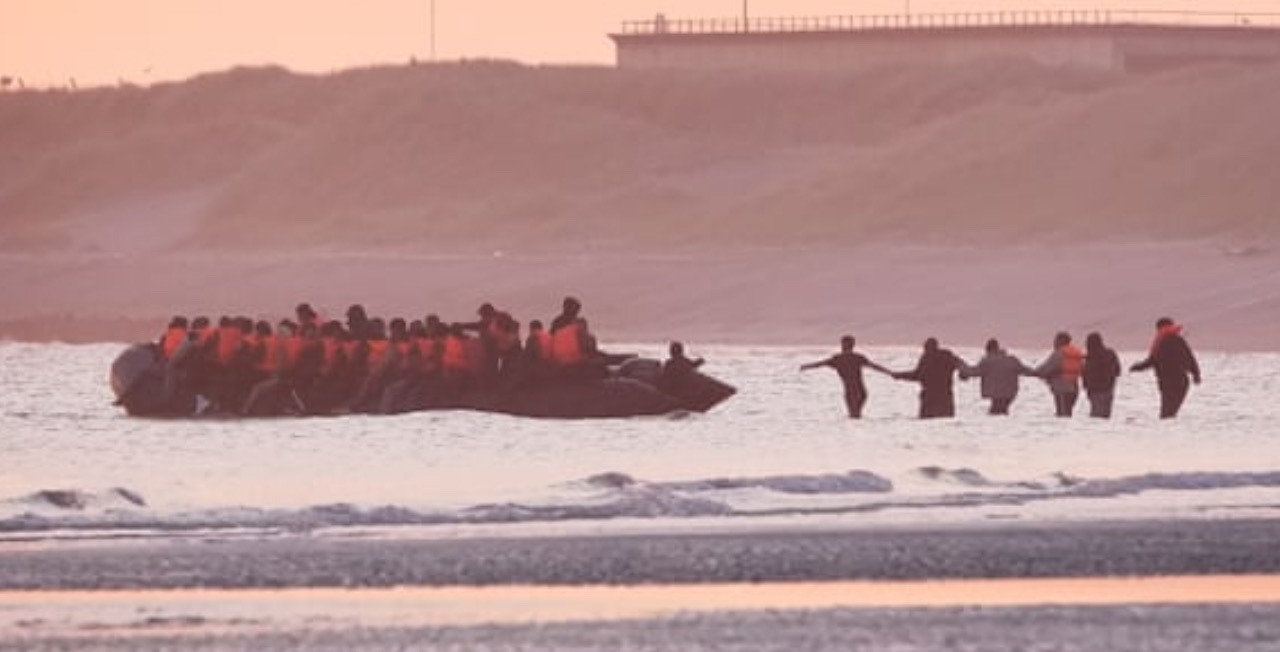
British taxpayers are set to foot part of the bill for a new French-led strategy aimed at halting small boat crossings in the English Channel, as Paris prepares to intercept vessels carrying asylum seekers — even if they are already at sea.
The UK is expected to contribute additional funding to help cover the cost of enhanced French operations within 300 metres of the shoreline.
These will include more police patrols, drones, and boats to intercept so-called “taxi boats” used by people smugglers to ferry migrants into UK waters.
The announcement follows reports that France is ready to launch the expanded operation from July, in time for the Franco-British summit and a high-profile state visit to London by President Emmanuel Macron.
The Home Office confirmed that the new plan would enable French enforcement officers to intervene earlier in Channel crossings, particularly in shallow waters near the coast — a significant shift from current rules, which largely prohibit intervention once boats are afloat unless there’s a safety risk.
What Are “Taxi Boats”?
“Taxi boats” are small vessels used by traffickers to pick up migrants just offshore, often a few hundred yards from the beach, and quickly set off for the UK.
Under previous guidelines, French authorities could only stop boats while still on land — often by slashing inflatable crafts — but had limited jurisdiction once they were at sea.
The new framework will allow French officers to act within a 300-metre coastal zone, enabling earlier intervention and more rapid disruption of people-smuggling operations.
UK-Funded Border Measures Could Expand Further
The UK already agreed to pay £480 million in 2022 to support French border policing, including night-vision gear and surveillance drones.
Following a recent agreement between Prime Minister Keir Starmer and President Macron, further UK contributions are anticipated — potentially including funding for France’s specialist anti-smuggling unit, the Compagnie de Marche.
The French force, launched earlier this year, currently operates on beaches with a £2.2m budget from existing funds.
However, with the rise in migrant activity and increased threats to officers — including violent confrontations involving petrol attacks — expansion of the unit is likely.
Charities Poised to Launch Legal Challenges
The move is already facing potential legal resistance. Human rights groups in both France and the UK are preparing to challenge the legality of intercepting asylum seekers at sea, raising concerns over breaches of international humanitarian law.
Steve Smith, chief executive of British charity Care4Calais, which operates in northern France, warned:
“We successfully challenged Channel pushbacks under the last Tory government. We will resist this new tactic with the same legal force. Any action that endangers lives at sea must be strongly opposed.”
France is reportedly bracing for legal proceedings in both national and European courts, amid scrutiny over the human rights implications of sea-based interceptions.