
British Royal Marines have taken part in a large-scale amphibious training exercise alongside French and Spanish forces on the North Devon coast, commemorating the 80th anniversary of the D-Day landings.
Exercise Catamaran, involving more than 3,000 personnel, marks the first activation of the UK-France Combined Joint Expeditionary Force (CJEF) since 2018.
The operation, which is being held for the first time in seven years, is taking place on both sides of the English Channel. Phase one is centred on the sand dunes of Braunton Burrows in North Devon, while the second stage will be conducted off the French Atlantic coast in the Bay of Biscay from 7 to 15 June.
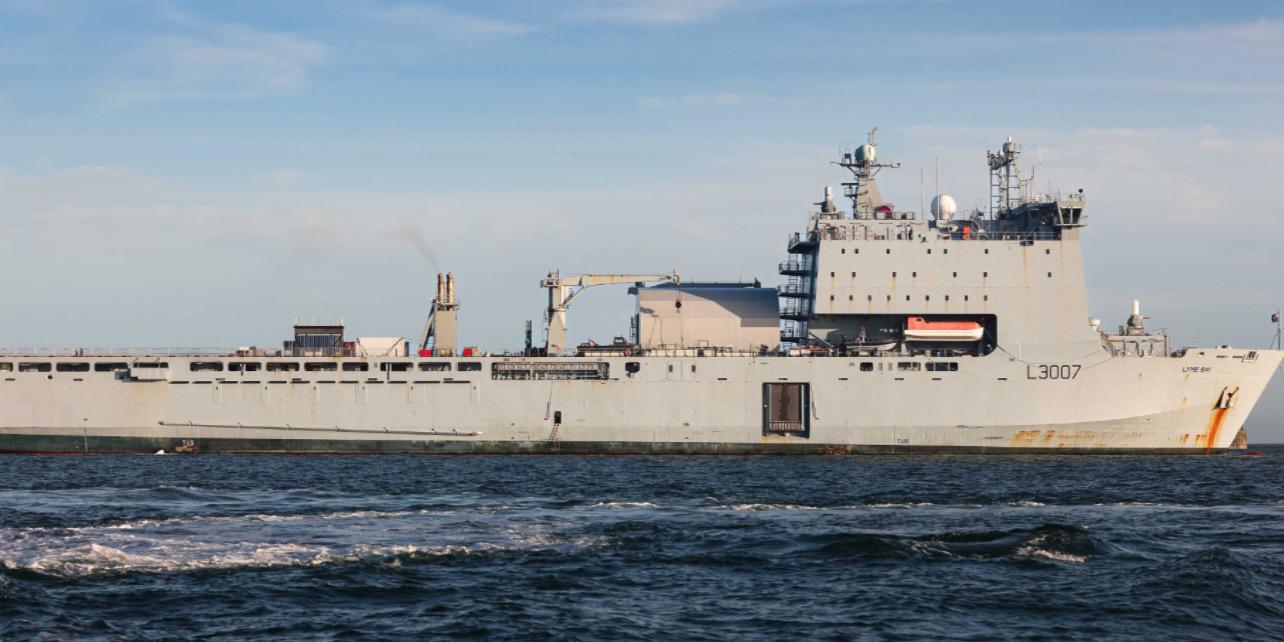
Led by France and supported by the Royal Navy, the exercise includes 11 warships and is a key component of the wider Polaris 25 series of NATO-aligned operations. British contributions are focused around RFA Lyme Bay and RFA Argus, which are launching Royal Marines from 40 and 47 Commando via seaborne and airborne assaults. These are supported by the Commando Helicopter Force, deploying Merlin helicopters from 845 NAS and Wildcats from 847 NAS.
With the Royal Navy’s amphibious capabilities currently limited to two active auxiliary ships, France has provided significant maritime support, deploying the helicopter carriers FS Dixmude and FS Tonnerre. Spain is also playing a major role with the participation of the LPD ESPS Galicia, while a small number of US Marines have joined the beach landings on British soil.
The CJEF was created under the 2010 Lancaster House Treaty to ensure rapid joint military responses between the UK and France. Exercise Catamaran is designed to reinforce operational readiness, interoperability, and joint capability in a high-stakes environment. The involvement of 20 warships and 40 aircraft across multiple NATO countries reflects the continued importance of combined amphibious warfare for European security.
During the second phase, British forces will operate from French vessels, while air assaults will be launched from RNAS Yeovilton onto designated sites along the French coastline.
The joint nature of the training underlines the strategic military partnership between Britain, France, and their NATO allies at a time of evolving global security challenges.
