
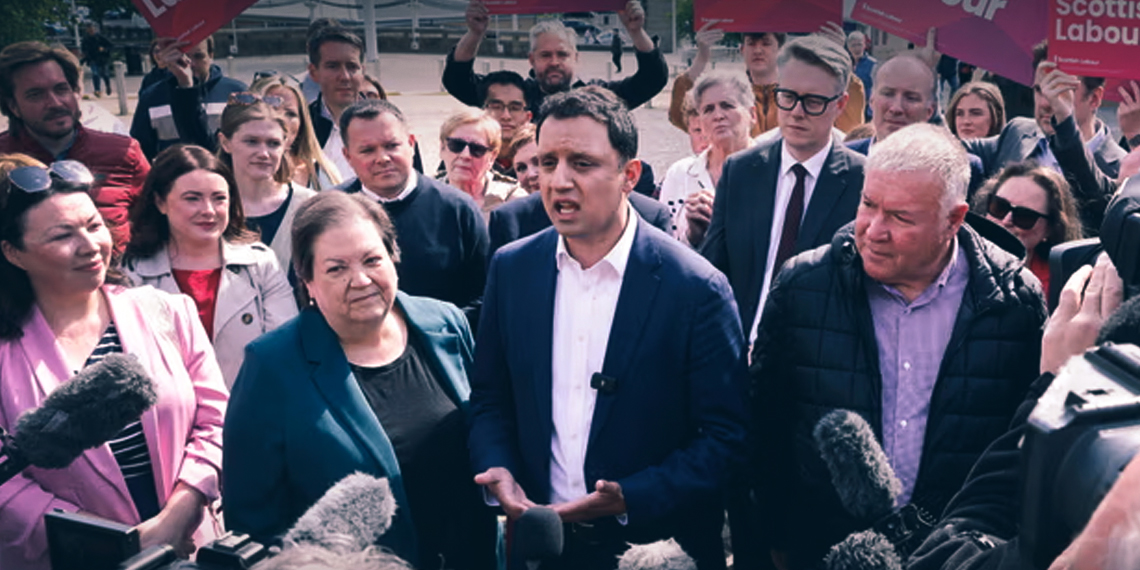
Scottish Labour has delivered a major upset in the Hamilton, Larkhall and Stonehouse by-election, with local favourite Davy Russell clinching victory over the incumbent Scottish National Party (SNP) — a result hailed by Labour leader Anas Sarwar as proof the “SNP’s balloon has burst”.
Speaking at a jubilant victory rally in Hamilton town centre on Friday morning, Sarwar said the result signalled a major turning point for Scottish politics and proved predictions of a Reform UK surge were wrong.
“We’ve proved the pundits, the pollsters and the bookies wrong. People on the ground believe the SNP are finished — a busted flush. They want change, and they know Scottish Labour is the only vehicle for that,” Sarwar declared.
Labour Defies Expectations in Hotly Contested Central Scotland Seat
The by-election was seen as a three-way battleground between Scottish Labour, the SNP, and a surging Reform UK, which has been gaining momentum across Scotland, particularly in working-class communities.
While Reform UK finished third with a significant 26% vote share, concerns were raised across party lines about the tone of its campaign.
Sarwar condemned what he described as a “racist and toxic campaign”, pointing directly at Nigel Farage for personal attacks that sparked cross-party criticism.
“Reform can make all the noise, and the Tories aren’t even at the races,” Sarwar said. “This is a straight fight now between Scottish Labour and the SNP — and this result shows we can win.”
SNP Defends Strategy as Vote Share Crumbles
Despite the loss, SNP leader John Swinney defended his party’s messaging, which had positioned the race as a contest between the SNP and Reform, in an effort to block far-right advances.
“We reflected what we were hearing on the doorstep — anger at Labour and concern about Reform. Our aim was to stop the spread of Farage’s poisonous politics in Scotland,” Swinney said at SNP HQ in Edinburgh.
The SNP lost nearly 17% of their previous vote share, while the Conservative vote collapsed from 18% in 2021 to just 6%.
Labour’s vote was down marginally by 2%, but the party gained enough support to win outright — a result Sarwar credited to an “unprecedented ground campaign”.
Labour’s Ground Game Pays Off
Labour’s success has been attributed to what insiders describe as the party’s strongest ever on-the-ground campaign in Scotland, with targeted canvassing and voter engagement in local communities. Deputy leader Dame Jackie Baillie said the win vindicated the party’s grassroots approach:
“Talking to people on the doorstep, listening to their concerns, and responding with empathy and clarity — that’s how we won.”
Despite scepticism towards Labour leadership in Westminster — particularly over decisions made by Keir Starmer and Rachel Reeves — campaigners say voters were receptive to honest conversations and long-form engagement on contentious issues.
Local campaigners described voters as having “a lot to get off their chests”, particularly regarding cost of living concerns and feelings of political disillusionment. Labour’s patient doorstep strategy appears to have helped win over those disaffected voters.
Reform Gains Ground — But Falls Short
Reform UK’s 26% share of the vote was nonetheless notable, especially given the party’s limited infrastructure in Scotland and the absence of a Scottish leader.
Analysts suggest their support came from three main sources: disaffected former Tory voters, protest votes against both Holyrood and Westminster, and those influenced by the narrative that it was a two-horse race between Reform and the SNP.
Sarwar dismissed that narrative as “frankly ludicrous” and accused the SNP of amplifying it to their own detriment.
