
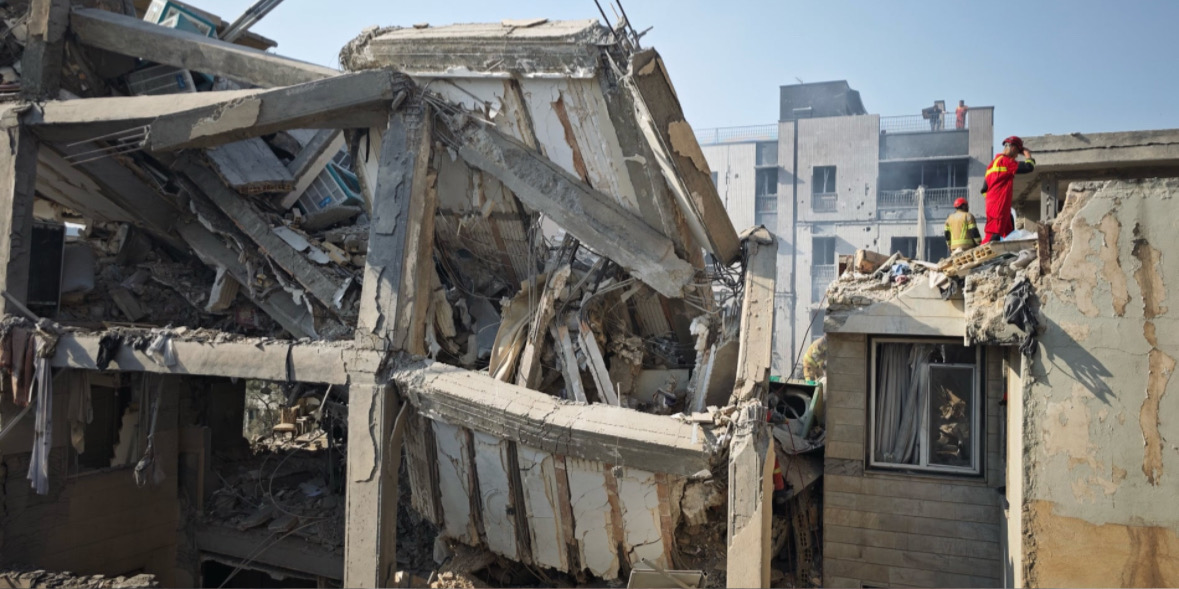
Downing Street has confirmed that Britain did not take part in Israel’s latest airstrikes on Iran, nor did the Royal Air Force (RAF) assist in intercepting Iranian drones during Tehran’s retaliatory barrage.
The UK government instead issued a call for urgent de-escalation amid rising fears of a broader regional conflict.
A spokesperson for Prime Minister Keir Starmer said on Friday: “The UK did not participate in Israel’s strikes overnight,” adding that no RAF assets were involved in knocking out drones during Iran’s counterattack on Israel.
Britain Distances Itself as Tensions Rise Between Israel and Iran
While the United States also denied involvement, describing Israel’s military action as a unilateral operation, both Washington and London warned Iran against further escalation or any moves that would endanger Western interests or personnel in the region.
Britain had previously supported Israel’s defence in April 2024, when RAF Typhoon jets intercepted Iranian drones, and to a lesser extent during a missile barrage in October 2024. However, this latest incident saw no British military engagement, according to officials briefed on the situation.
Speaking on Friday, Prime Minister Starmer stressed the need for restraint: “Reports of these strikes are concerning, and we urge all sides to de-escalate. Further escalation serves no one. Stability in the Middle East must be prioritised, and we are working closely with our international partners to encourage diplomacy.”
Split in British Political Response
While the Labour leader urged calm, Conservative cabinet minister Kemi Badenoch struck a more hawkish tone during her speech at the Scottish Conservatives’ conference.
She expressed clear support for Israel’s right to act militarily, particularly in the face of Iran’s alleged efforts to develop nuclear weapons.
“We cannot have Iran obtaining nuclear weapons. Iran has attempted terrorist attacks on British soil. If Israel believes Iran is close to nuclear capability, they cannot sit back,” she said. “Let’s be clear – Iran getting nuclear weapons would be catastrophic for the UK and the world.”
Asked whether this stance contradicted Starmer’s call for de-escalation, Badenoch said: “Things do need to de-escalate, but pretending warm words alone will stop Iran is naive.”
European Leaders Unite in Calls for Restraint
In a coordinated response, European leaders also urged restraint on both sides. Ursula von der Leyen, President of the European Commission, labelled the Israeli strikes “deeply alarming” and stressed that diplomatic resolution is now “more urgent than ever”.
German Chancellor Friedrich Merz committed to using “all diplomatic channels” to prevent further escalation, while French President Emmanuel Macron reiterated France’s condemnation of Iran’s nuclear ambitions but also reaffirmed Israel’s right to self-defence.
The leaders of France, Germany, and the UK held talks on Friday morning, with all three agreeing to remain in close coordination amid the worsening crisis.
International Condemnation of Israeli Action
Not all international reactions were supportive of Israel. Spain’s Deputy Prime Minister Yolanda Díaz accused Israeli Prime Minister Benjamin Netanyahu of “dragging the world into war” and called for sanctions and respect for international law.
Turkish President Recep Tayyip Erdoğan went further, calling the strikes a “clear provocation” and condemning Netanyahu’s government as a “massacre network” responsible for fuelling regional instability.
Meanwhile, Italian Foreign Minister Antonio Tajani revealed he had urged both Israeli and Iranian officials to step back and return to diplomatic engagement.
