
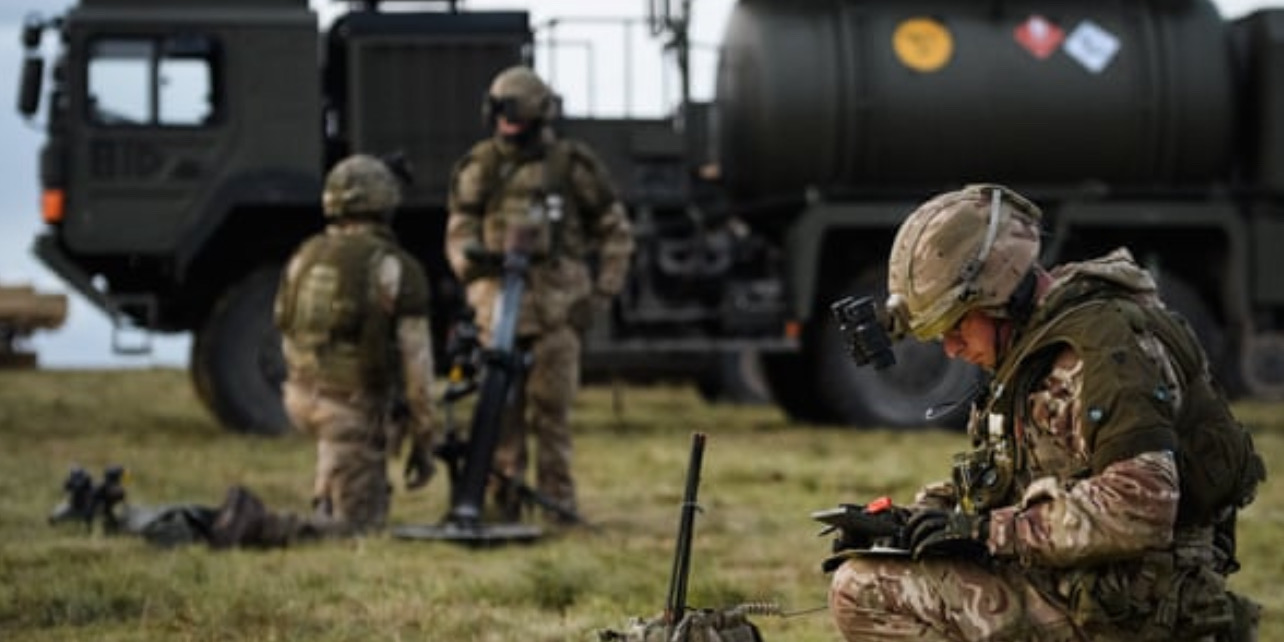
Prime Minister Keir Starmer has declined to commit to a specific date for raising UK defence spending to 3% of GDP, stating he refuses to engage in what he described as “performative fantasy politics”.
His remarks come as the Labour government prepares to unveil a wide-ranging strategic defence review.
Speaking during a visit to a military facility in Scotland, Starmer emphasised that his pledge to meet 2.5% of GDP on defence by 2027 is a clear signal of the government’s seriousness.
However, he warned that going beyond this without financial clarity would be irresponsible.
“I’m not prepared, as a Labour prime minister, to promise a date without knowing exactly where the funding would come from,” Starmer told BBC Radio 4’s Today programme. “When it comes to defence and national security, we cannot afford to make hollow commitments.”
He stressed that the government had already accelerated its defence funding target from the end of this Parliament to 2027, underlining the new administration’s focus on national security.
“We’ve moved fast on 2.5%, and we take the same responsible approach to 3%. But I won’t pluck figures out of the air unless I can back them up.”
The upcoming 130-page UK defence review is expected to set a firm tone, warning that Britain must be prepared for conflict in Europe or the North Atlantic.
While it is not likely to promise immediate increases in troop numbers, it will focus on enhancing “war-fighting readiness”, including the expansion of weapons stockpiles to counter threats from Russia.
“The global security landscape has shifted dramatically,” Starmer said. “To prevent conflict, you must be ready for it. That’s how deterrence works.”
When asked whether British troops could be deployed to support NATO allies bordering Russia, Starmer said he hoped it would not come to that but warned against complacency.
“We all saw the shocking scenes in Ukraine three years ago – tanks crossing borders in Europe. We cannot ignore the reality of the Russian threat.”
Despite the review’s focus on readiness, no immediate increases in the defence budget have been confirmed. Defence Secretary John Healey admitted over the weekend that any plans to expand the armed forces, now at their smallest size in over 300 years, would need to wait until after the next general election.
Healey acknowledged longstanding challenges in recruitment and retention, revealing that the British Army’s current strength has fallen to 70,860—well below the government’s target of 73,000.
