
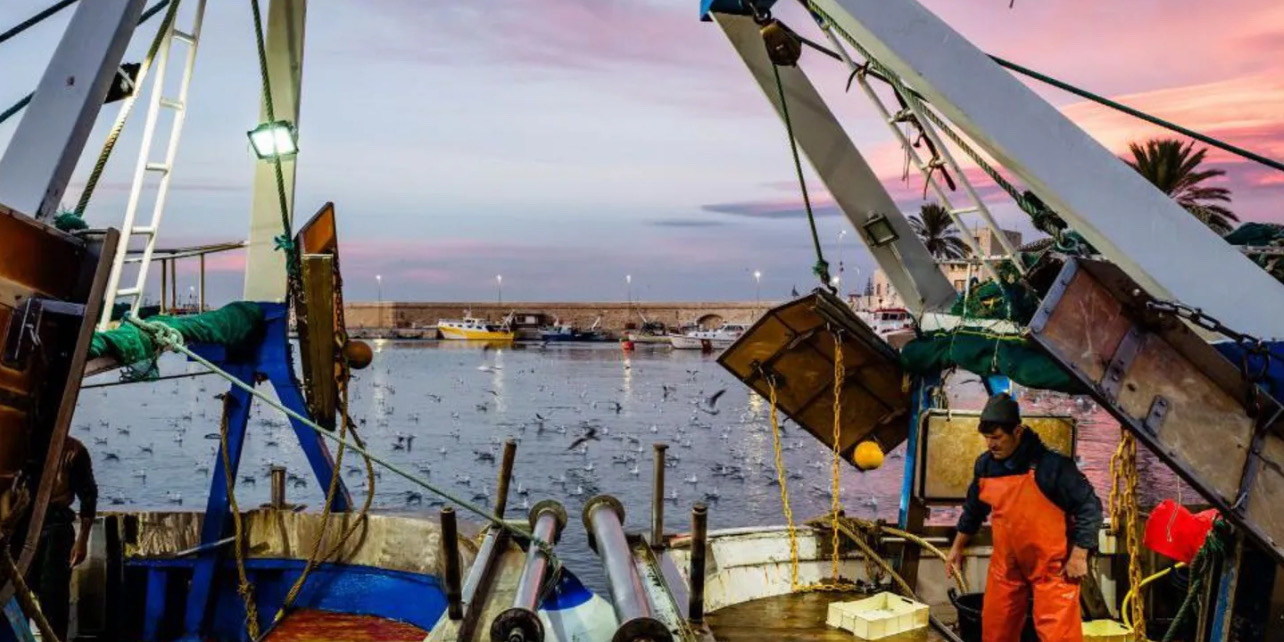
The UK government has proposed expanding its bottom trawling ban to cover a larger portion of English waters in a move to protect fragile marine ecosystems. The plan would increase the area protected from 18,000km² to 48,000km²—around 18,500 square miles—across the UK’s offshore Marine Protected Areas (MPAs).
The proposal, which is subject to a 12-week consultation ending 1 September, was announced as the UN Ocean Conference opened in Nice, France. The summit is focused on ocean protection and comes amid growing international pressure to protect one-third of international waters by 2030 under the High Seas Treaty.
Bottom trawling, a fishing practice that drags large weighted nets across the seafloor, has been widely condemned for its environmental impact. Naturalist Sir David Attenborough called the method “appalling,” and his latest documentary Ocean with David Attenborough featured dramatic footage of bottom trawling nets bulldozing through silt and indiscriminately catching marine life.
The UK’s Environment Secretary, Steve Reed, said: “Without urgent action, our oceans will be irreversibly destroyed.” The government said its proposal would apply to 41 of England’s 181 MPAs and would help protect rare marine animals and fragile seabed habitats.
MPs on the Environmental Audit Committee have called for wider bans on bottom trawling, seabed dredging, and aggregate mining in MPAs. Conservation groups welcomed the government’s proposal but stressed the need for quick implementation.
Greenpeace UK’s Head of Oceans, Ariana Densham, called the consultation a “long-overdue completion of a process started by the previous government.” Joan Edwards, director of policy at The Wildlife Trust, said the ban would be a “win-win for both nature and climate.”
Meanwhile, pressure is mounting on countries, including the UK, to ratify the High Seas Treaty—an agreement backed by 193 nations two years ago to protect 30% of the world’s international waters. At the opening of the UN conference, it was announced that 15 additional countries had ratified the treaty, bringing the total to 47—still short of the 60 required for it to come into force.
French President Emmanuel Macron, co-hosting the event with Costa Rican President Rodrigo Chaves, called for a moratorium on deep sea mining and stressed that “the ocean is not for sale.” The comments were a direct response to former U.S. President Donald Trump’s April decision to issue deep-sea drilling permits, a move that China denounced as a violation of international law.
More than 2,000 marine scientists have called for a pause on deep-sea exploration until its ecological impacts are better understood.
