
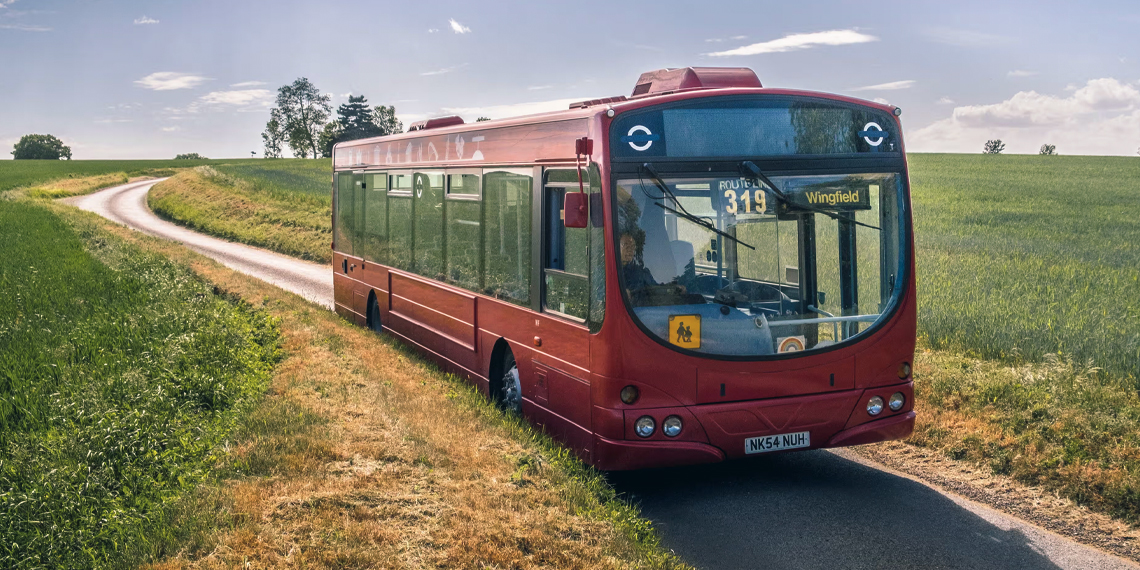
Local bus services across England are continuing to deteriorate despite years of government investment, according to a new report by the National Audit Office (NAO).
The findings reveal a significant reduction in service provision and passenger numbers, with concerns mounting over long-term viability and public transport access, particularly in rural and suburban areas.
The NAO report shows that bus routes outside of London have seen a 15% drop in total mileage operated since 2019. Passenger usage remains 9% below pre-pandemic levels, despite billions in government support aimed at revitalising the sector.
Nearly half of all local authorities assessed their capacity to deliver bus services as either poor or very poor. Rising congestion is also contributing to falling passenger satisfaction, with slower and less reliable journeys pushing more people towards private car use.
Although some improvements, including the rollout of electric buses, are yet to be implemented from the £3 billion funding package announced under Boris Johnson’s Bus Back Better strategy, the NAO found that a substantial portion of the funding was redirected to emergency COVID-19 support. In 2023-24 alone, £1.8 billion – half of all bus operator revenue – came from public subsidies. The report questions the long-term commercial sustainability of many routes under these conditions.
A key concern raised by the NAO is the risk of a “cycle of decline” in rural and suburban areas, where reduced services lead to fewer passengers, and fewer passengers prompt further cuts. This pattern could gradually erode public transport options for entire communities.
The Department for Transport (DfT) now plans a legislative overhaul through the Labour government’s upcoming Bus Services Bill. The bill aims to empower local authorities with new franchising powers to run or regulate their own networks. However, the NAO has warned that the franchising model is costly and complex, making it inaccessible for many councils without substantial central support.
Gareth Davies, head of the NAO, urged closer collaboration between national and local authorities, stressing the need to maximise the impact of limited funding to halt the decline in usage and service quality.
Industry representatives pushed back against some of the report’s conclusions. Graham Vidler, CEO of the Confederation of Passenger Transport, noted that passenger numbers outside London rose by 15% last year, with 83% of customers reporting satisfaction with services. He acknowledged that traffic congestion, pandemic-related disruption, and long-term underfunding have hurt the sector, but disagreed with the portrayal of declining commercial viability.
Local leaders echoed calls for more support. Cllr Adam Hug of the Local Government Association said the lack of funding and resources has restricted councils’ ability to improve local bus services. He welcomed the government’s plan for additional support and a longer-term funding strategy to enable franchising where councils choose to adopt it.
A spokesperson for the DfT defended the government’s approach, highlighting a record £1 billion investment to improve bus reliability and frequency nationwide.
Despite these commitments, the NAO’s report underscores a growing gap between government ambitions and on-the-ground outcomes, with England’s local bus networks still struggling to meet demand in many areas.
