
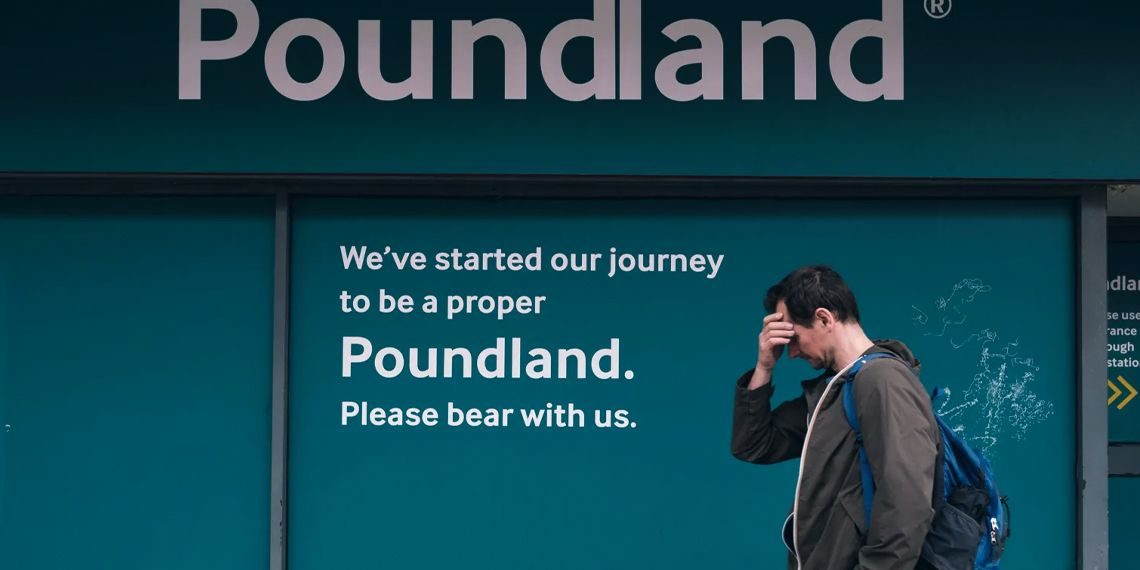
Poundland, one of the UK’s best-known discount retailers, has announced plans to shut down 68 of its stores, putting more than 1,000 jobs at risk. The move is part of a wider restructuring strategy aimed at stabilising the struggling business and securing its long-term future.
The turnaround plan, which still needs court approval, follows the recent sale of Poundland for a nominal sum to US investment firm Gordon Brothers. The chain, which operates 792 stores across the UK and Ireland and employs around 16,000 people, is also preparing to close two key distribution centres — one in Darton, South Yorkshire, and another in Bilston, West Midlands.
Managing Director Barry Williams admitted that although the closures are “regrettable,” they are “necessary if we’re to achieve our goal of securing the future of thousands of jobs and hundreds of stores.” He added that the business had been “falling short of its high standards for a significant period,” despite still serving over 20 million shoppers each year.
More Closures on the Horizon
In addition to the confirmed closures, Poundland has entered negotiations with landlords seeking rent reductions. Combined with upcoming lease expirations, this could lead to up to 70 additional store closures.
The company’s future strategy will see several major changes in operations. Frozen food sales will be discontinued, with a renewed focus on its popular £3 meal deal and core grocery items such as milk. Its e-commerce site, poundland.co.uk, will also stop processing online orders and instead serve as a promotional and branding platform.
Changes to Product Ranges and Store Focus
Poundland has committed to expanding its womenswear offering and bringing back key seasonal general merchandise ranges. The retailer will also restore product categories that had previously been removed, aiming to re-engage loyal customers who have noticed gaps on the shelves.
The restructuring comes after former owner Pepco, a Polish retail group, offloaded the brand for a token amount following years of declining sales. Pepco also pointed to increased employer National Insurance costs introduced in April as an additional burden on operations.
Poundland’s overhaul signals a significant transformation for the high street chain as it works to revive its fortunes under new ownership.
