
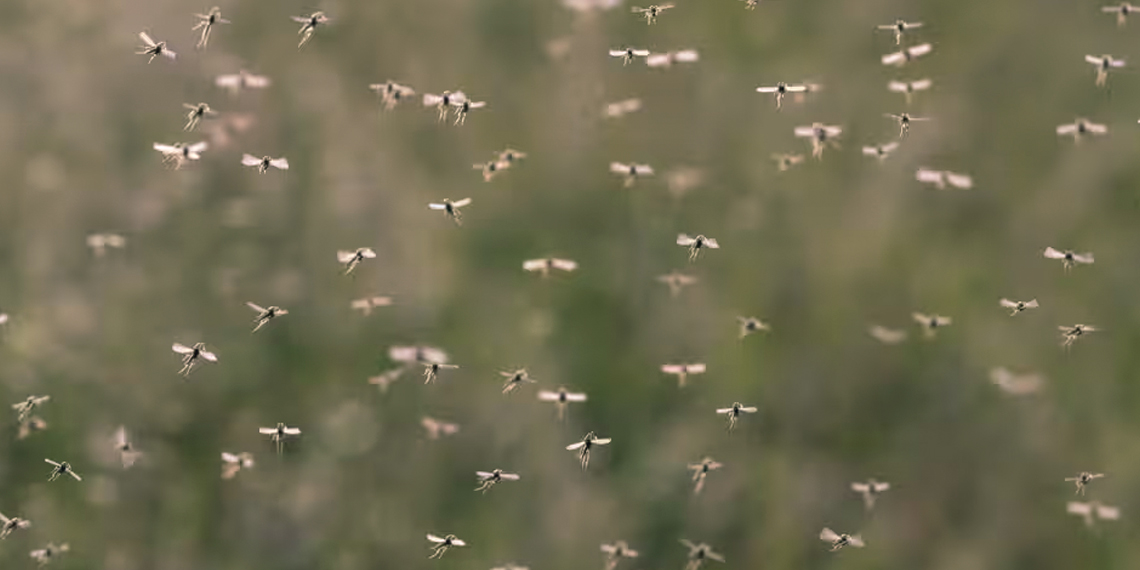
The UK Health Security Agency (UKHSA) has confirmed the first detection of West Nile virus in mosquitoes in the UK, marking a significant development in the spread of vector-borne diseases due to climate change. Genetic material from the virus was identified in mosquito samples collected from wetlands along the River Idle near Gamston, Nottinghamshire, during July 2023.
Although this is the first time West Nile virus has been found in British mosquitoes, UKHSA stressed that the risk to the general public remains “very low”, and there is no current evidence of human or animal transmission.
First Signs of Climate-Linked Disease Expansion
The virus was detected as part of the Vector-Borne Radar (Real-time Arbovirus Detection and Response) programme, led by the Animal and Plant Health Agency (APHA). Dr Arran Folly, APHA’s arbovirologist and lead of the surveillance programme, warned that this discovery is part of a broader trend in which mosquito-borne diseases are spreading northwards due to global warming.
“Climate change is altering the geographical boundaries of viruses like West Nile, dengue and yellow fever,” said Dr Folly. “What we’re seeing is a new landscape of disease risk in regions that previously had minimal exposure.”
How West Nile Virus Spreads
West Nile virus is primarily maintained in birds and transmitted via Aedes vexans mosquitoes, which are native to the UK and typically feed on birds. However, in rare cases, they can infect humans or horses. Most human infections cause no symptoms, but around 20% may experience fever, headaches, and muscle aches. A small percentage can develop severe neurological complications such as encephalitis or meningitis.
The detection involved pooling mosquito samples in groups of 10, with two of 200 tested pools testing positive for viral fragments. Experts believe the virus may have entered the UK via an infected migratory bird.
Temperature Key to Viral Survival
According to scientists, temperature plays a critical role in whether the virus can take root in mosquito populations. At 15°C, it takes months for the virus to become infectious—longer than a mosquito’s typical lifespan. But at 30°C, the process is shortened to just two to three weeks, increasing the chance of local transmission.
UK Authorities Enhancing Surveillance
While no human or animal infections have yet been detected in the UK, authorities are increasing monitoring efforts. Healthcare professionals have been advised to test patients with unexplained encephalitis as a precaution. Dr Meera Chand of UKHSA confirmed the virus is already widespread in parts of Europe and said this detection is not unexpected.
“The presence of West Nile virus in UK mosquitoes is a reflection of broader environmental shifts. But we continue to assess the risk as very low for the general public,” said Dr Chand.
Professor Paul Hunter from the University of East Anglia added that, with longer, hotter summers, endemic transmission of the virus in the UK—especially in southern regions—could become a reality in the future.
