
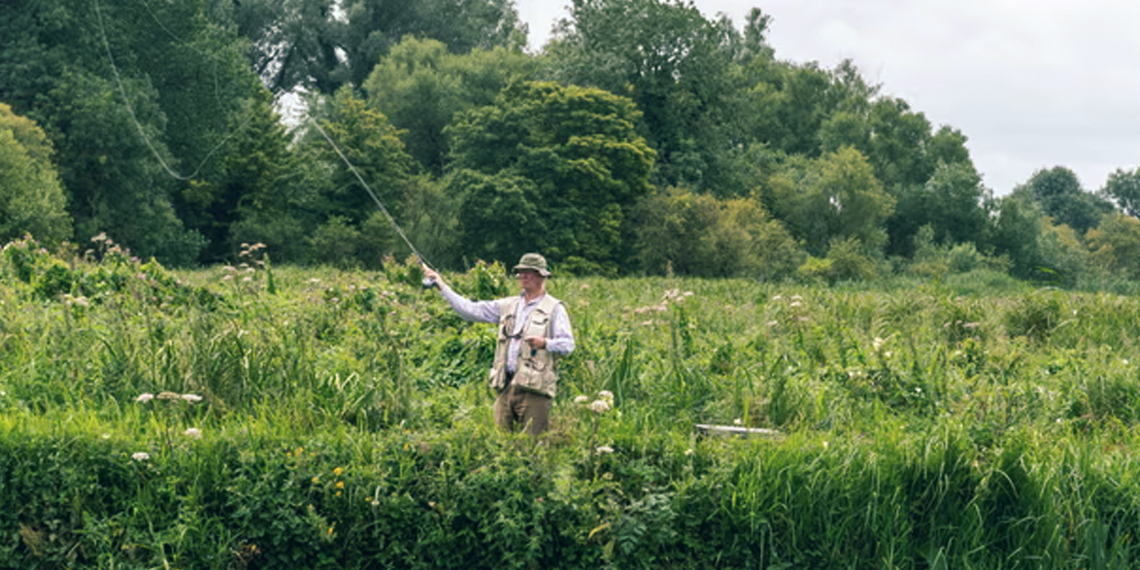
Citizen-led monitoring of rivers by anglers across England and Wales has exposed alarming levels of pollution, with over a third of freshwater sites breaching legal phosphate limits required for good ecological status, according to a new report by the Angling Trust and Fish Legal.
The findings come from more than 4,000 water samples collected between July 2023 and July 2024 by trained volunteers in the Water Quality Monitoring Network (WQMN).
Their tests measured key pollutants including phosphates, nitrates, ammonia, and turbidity across 76 river catchments — with results painting a stark picture of environmental decline.
Freshwater Habitats ‘In Crisis’
Jamie Cook, chief executive of the Angling Trust, warned: “Our freshwater habitats are in crisis – a fact now widely recognised by the public, politicians and regulators. This report reinforces what many anglers already knew – the health of our rivers is deteriorating.”
He added that anglers are now “playing a vital role in river conservation” by gathering credible data and pressing for change in water management policies.
One-Third of Samples Breach Phosphate Limits
The Water Framework Directive sets a threshold of 0.306ppm for phosphate levels in healthy freshwater systems.
Shockingly, 34% of the samples analysed by angling groups surpassed this limit. In the Warwickshire Avon catchment, 86% of monitored sites failed to meet good ecological status for phosphate levels.
Meanwhile, 45% of samples across England registered nitrate concentrations above 5ppm — an independently recognised threshold for excess in freshwater habitats — although no formal legal limit exists.
Southern England Hit Hard
Pollution levels were particularly severe in the Medway catchment, spanning Kent, Surrey, and East Sussex, where 100% of sites tested failed to meet good ecological standards.
Volunteers from the Royal Tunbridge Wells Angling Society gathered 279 samples across 15 locations — all breaching phosphate limits.
Independent analysis linked more than 90% of pollution sources to sewage discharges from wastewater treatment works and combined sewer overflows managed by Southern Water.
This prompted public protests and eventually led Southern Water to expand the Fullerton wastewater facility, significantly reducing sewage spills.
Chalk Streams and Missed Protections
Despite growing evidence of river degradation, Labour MPs recently blocked a proposed amendment to the Planning and Infrastructure Bill that would have added special protections for chalk streams — rare and ecologically unique waterways like the Test and Itchen in Hampshire.
Anglers monitoring these rivers provided compelling data showing direct pollution from Southern Water infrastructure. Yet, the opportunity to recognise these habitats as irreplaceable in law was rejected by the committee.
Anglers Demand Government Action
Campaigners are now urging the government and water companies to take stronger action to protect river ecosystems.
Alex Farquhar of the Angling Trust said: “This report clearly shows systemic failure in governance. Listening to citizen science is no longer optional — it’s essential.”
In Warwickshire, more than 50 anglers joined the WQMN effort, with 86.4% of sampled sites registering average phosphate levels above legal limits — significantly worse than the national average.
Andy Hammerton, a volunteer from the Girling Angling Society, said: “Our efforts may come too late for this generation, but we hope to turn the tide now so that future generations can enjoy thriving rivers full of life.”
