
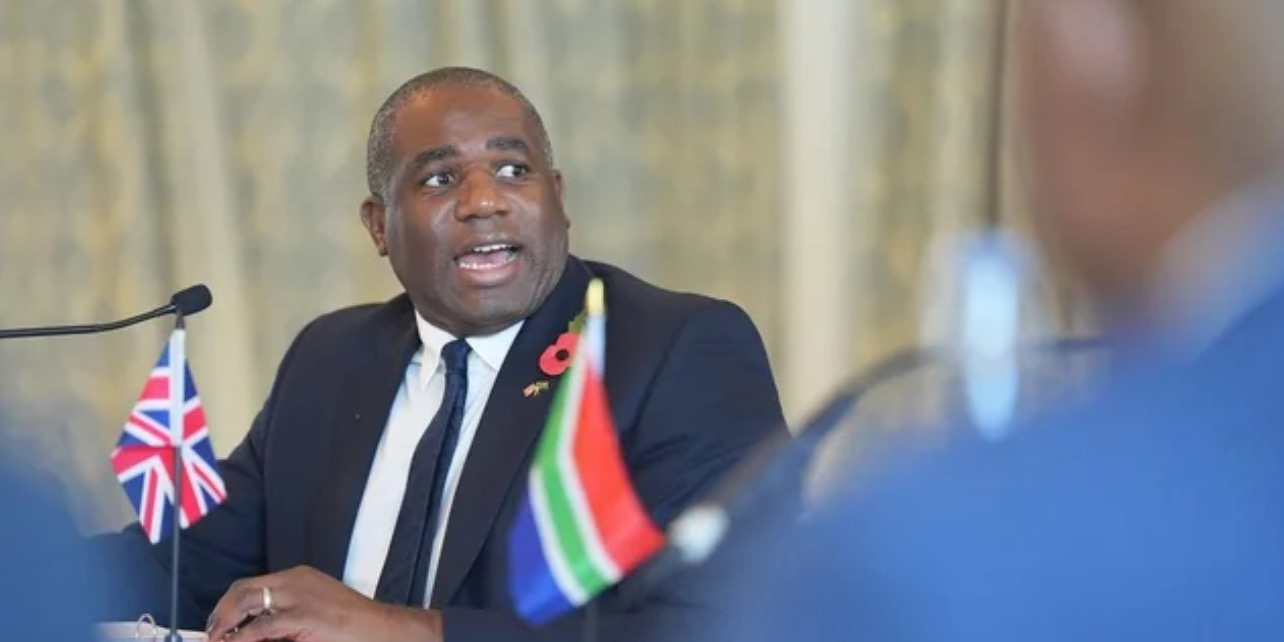
The United Kingdom is currently holding discussions with France and Saudi Arabia regarding the potential recognition of a Palestinian state, ahead of a key United Nations conference scheduled for June.
Foreign Secretary David Lammy confirmed the talks during a session with the House of Lords International Relations and Defence Committee.
Lammy stated that Britain supports recognising Palestine, but only when such recognition would lead to meaningful change on the ground rather than being a symbolic gesture. He emphasised that unilateral moves by some European countries had so far made limited impact.
President Emmanuel Macron of France recently indicated that Paris could move to recognise a Palestinian state at the upcoming UN conference. He framed it as a strategic step that could prompt further recognitions globally, including the potential for more countries to recognise Israel in return.
Lammy highlighted the importance of Palestinian statehood, describing it as unacceptable that generations have lived without a nation. He also stressed that any sustainable solution for Gaza must include the departure of Hamas from leadership roles and full demilitarisation, citing Northern Ireland’s peace process as a relevant example.
Concerns were also raised about ongoing Israeli settlement expansion in the West Bank. Lammy pointed out that 59 outposts were established over the past year—an alarming rise from the historic average of seven annually. He warned that such actions erode the viability of a two-state solution.
His comments follow a parliamentary debate on the visit of Palestinian Authority Prime Minister Mohammad Mustafa, the first such official visit since 2021. During the visit, the UK government signed a memorandum of understanding and announced a £101 million aid package for the Occupied Palestinian Territories.
Parliamentary Under-Secretary for the Middle East, Hamish Falconer, reaffirmed the UK’s commitment to a two-state solution, saying the government is supportive of recognising Palestinian statehood in that context. However, he acknowledged ongoing complexities around what form a future Palestinian state could realistically take.
Conservative MP Sir Desmond Swayne voiced concerns over whether there remains sufficient viable land for a future Palestinian state, given the expansion of Israeli settlements.
Momentum for Palestinian recognition has been growing globally. As of now, 147 of the 193 UN member states recognise Palestine as a sovereign state. In 2024, Spain, Ireland, and Norway formally extended recognition. If the UK and France proceed, they would become the first G7 countries and permanent UN Security Council members to do so.
Palestinian Prime Minister Mohammad Mustafa described recognition as a foundational step that could reshape future diplomacy, saying it would establish a new political platform for negotiations.
Meanwhile, Israeli Prime Minister Benjamin Netanyahu has repeatedly voiced opposition to Palestinian statehood, insisting that Israel must retain security control over Gaza. He has also rejected any role for the Palestinian Authority in governing the territory, framing Palestinian statehood as a reward for terrorism.
