
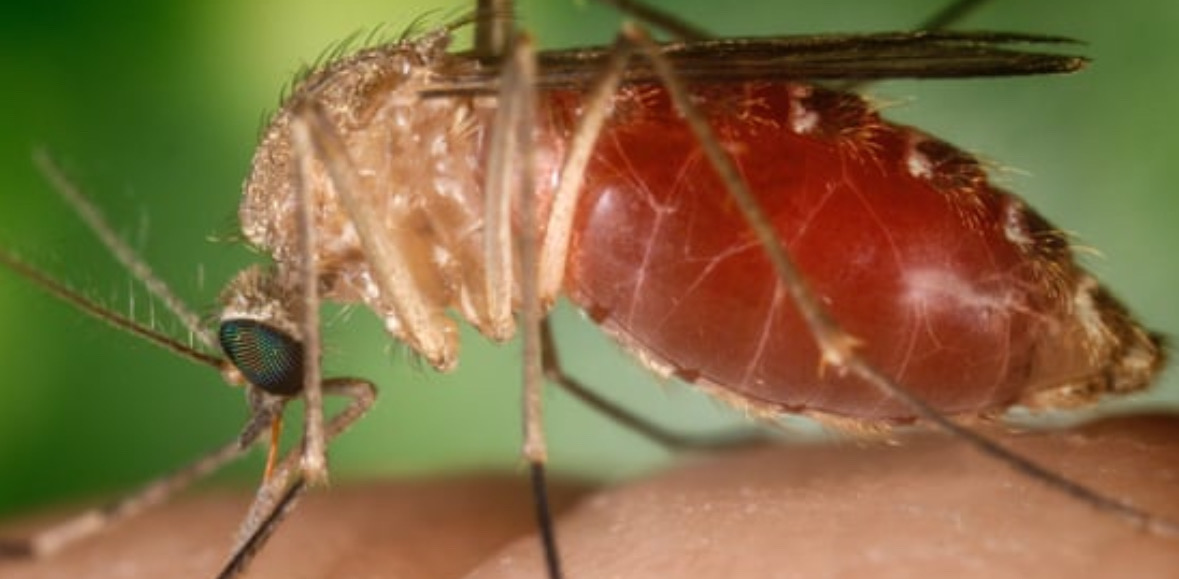
Leading scientists have warned that climate change could make Britain increasingly vulnerable to tropical diseases such as dengue, chikungunya, and West Nile virus — illnesses previously confined to hotter regions of the world.
The experts are urging the UK government to step up international efforts to prevent the spread of mosquito-borne infections.
The alert follows confirmation by the UK Health Security Agency (UKHSA) that mosquitoes carrying West Nile virus have been found in the UK for the first time. Although there is currently no evidence of human transmission, the agency says rising temperatures pose a growing threat.
Royal Society fellow and mosquito specialist Professor Tom Solomon said climate change is altering local mosquito populations, particularly in southern England.
“Species such as the Asian tiger mosquito and the Culex genus — both known vectors for dengue and West Nile — have been detected in the UK, though not yet in sufficient numbers to cause large outbreaks,” he noted.
According to Professor Robert Jones of the London School of Hygiene and Tropical Medicine, the worst-case scenarios could see a fivefold rise in mosquito-borne disease outbreaks in Europe by the 2060s if global temperatures climb 4°C to 5°C above pre-industrial levels.
“While a sudden explosion of tropical illnesses in the UK is unlikely, warmer conditions are increasingly making the country hospitable to disease-carrying mosquitoes,” he explained.
Scientists emphasise that for these diseases to take hold in the UK, infected individuals would need to be bitten by the right mosquito species, which would then transmit the virus to others.
Currently, the UK does not have a large enough population of such mosquitoes to trigger sustained outbreaks — but that could change as the climate continues to warm.
Despite the emerging risk, public health officials stress that there is no need for widespread vaccination or anti-malarial prescriptions in the UK at this stage. Insect repellent is also not required for general summer use.
Instead, experts argue that the UK’s best line of defence lies in strengthening disease prevention efforts abroad.
Professor Heather Ferguson of the University of Glasgow, who leads the Mosquito Scotland initiative, called for renewed international investment: “One child under five still dies of malaria every minute. The UK must invest in controlling these diseases where they remain endemic. Preventing their spread overseas will ultimately protect us all.”
She criticised the government’s recent foreign aid cuts, warning they could lead to a collapse in vital disease surveillance and treatment programmes in affected countries.
“The pandemic taught us that diseases know no borders. Cuts to overseas aid will only increase the global burden of illness,” Ferguson added.
Professor James Wood of the University of Cambridge echoed the sentiment, stressing that climate-driven health threats require coordinated global responses. “Policies that support net zero emissions targets are among the most effective long-term protections against disease spread,” he said.
The Foreign, Commonwealth & Development Office responded by reaffirming its commitment to global health.
A spokesperson said: “Global health security is essential to national security. The UK is a major contributor to international malaria efforts and the third-largest donor to the Global Fund. This week, we adopted a new pandemic agreement to boost international cooperation in tackling health threats.”
