
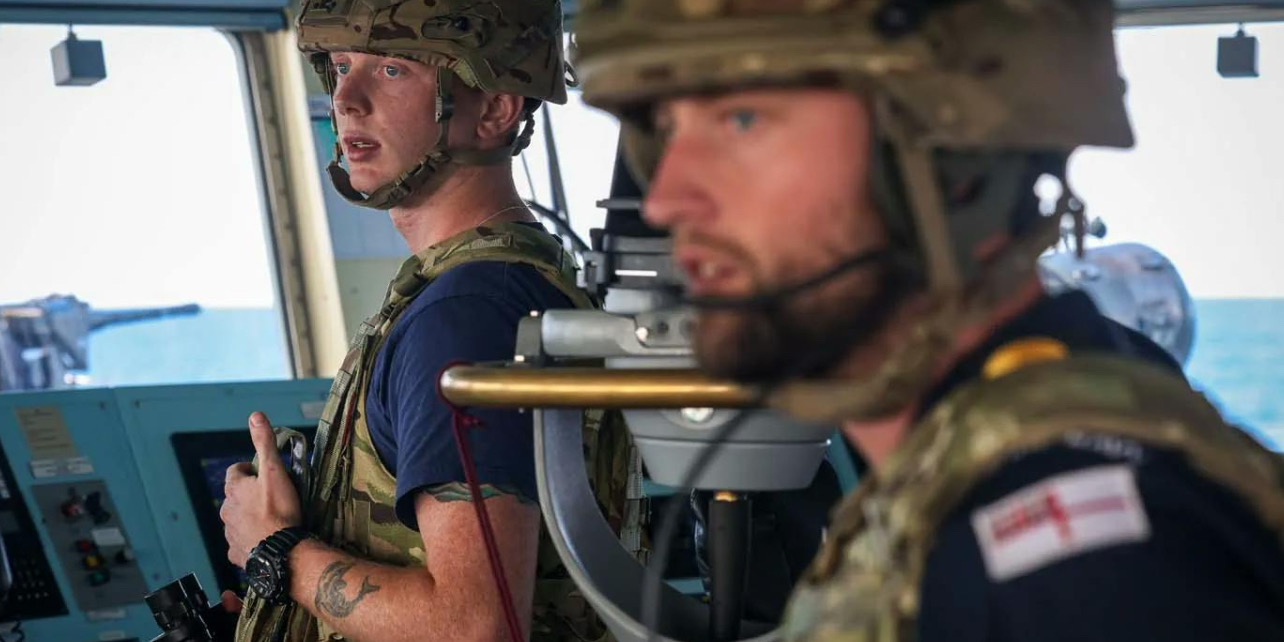
A Royal Navy patrol ship, HMS Spey, has completed a 16-day multinational military exercise in the South China Sea, sailing through contested waters despite warnings from Beijing.
The operation, known as Exercise Bersama Shield 25, involved close cooperation between Commonwealth forces under the longstanding Five Power Defence Arrangements (FPDA), which include the United Kingdom, Australia, New Zealand, Malaysia and Singapore.
The exercise focused on regional defence and preparedness, including simulated protection of Malaysian territory, maritime surveillance, gunnery drills, and air and surface threat responses.
UK artillery personnel from 148 Battery, 29 Commando Royal Artillery supported targeting operations, while HMS Spey’s air safety unit collaborated with HMAS Sydney to coordinate fast jet missions.
Commanded by Captain Mohd Effendy bin Shuib of the Royal Malaysian Navy, the exercise highlighted the growing importance of regional security cooperation in a strategically vital area. HMS Spey’s presence alongside Australian, Singaporean, and Malaysian warships demonstrated the UK’s commitment to peace and stability in the Indo-Pacific.
The South China Sea remains one of the world’s most disputed maritime regions, with China continuing to assert control over vast areas marked by the controversial nine-dash line. These claims overlap with the territorial waters and exclusive economic zones of neighbouring countries including Vietnam, the Philippines and Malaysia.
Despite a 2016 international tribunal ruling under the United Nations Convention on the Law of the Sea (UNCLOS) that dismissed China’s claims as legally baseless, Beijing has intensified the militarisation of artificial islands and rejected the verdict.
China’s ambassador to the UK recently issued a statement opposing the Royal Navy’s operations in the area, calling on Britain to cease what Beijing sees as provocation.
However, freedom of navigation operations (FONOPs) are a cornerstone of international maritime law, aimed at safeguarding the principle that no nation can unlawfully restrict movement in international waters.
The South China Sea is a key global shipping route, with nearly a third of global trade passing through its waters. As such, its security and openness are of strategic importance to the international community.
By participating in joint exercises and sailing through these contested waters, the United Kingdom reaffirms its support for a rules-based international order and the lawful use of the seas.
The Royal Navy’s continued presence in the Indo-Pacific reflects a broader strategic focus on strengthening defence ties across the region and ensuring maritime stability.