
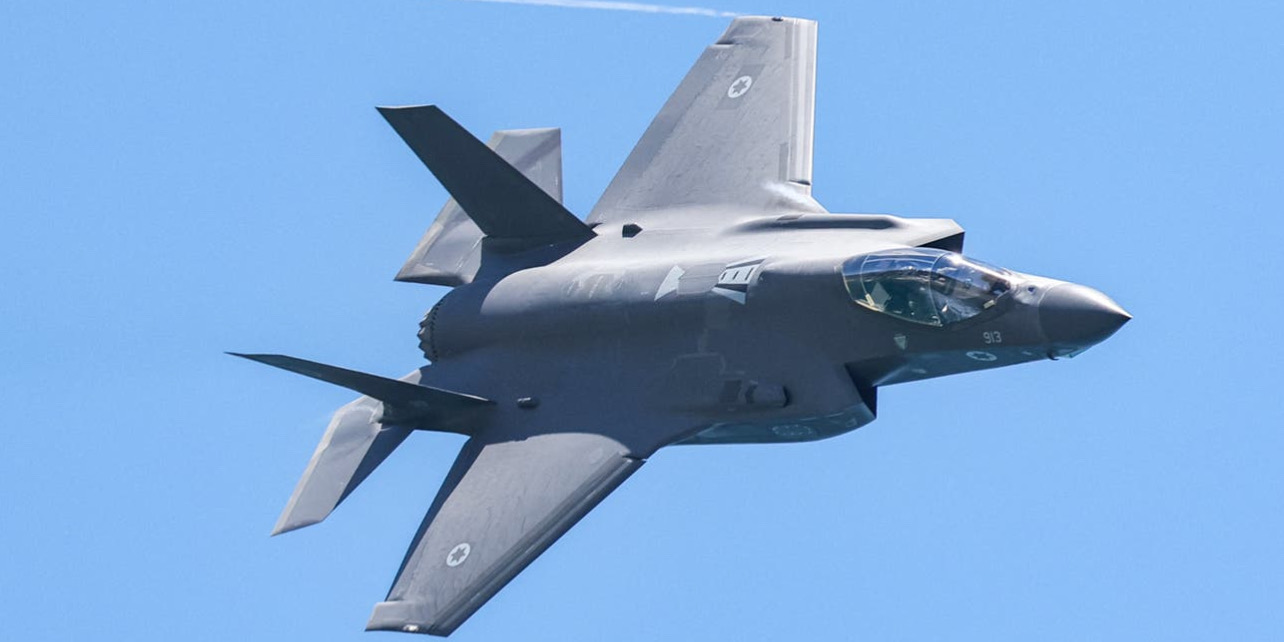
The British government is facing a major legal challenge in the High Court this week over its continued sale of F-35 fighter jet components to Israel, despite mounting concerns over the use of these aircraft in Gaza.
The case, brought by Palestinian rights organisation Al-Haq, will begin on Tuesday and run for four days. It centres on the UK’s decision to exclude F-35 parts from a suspension of 30 arms export licences to Israel—despite the government’s own admission that Israel may not be complying with international humanitarian law in its military operations in Gaza.
The judicial review is being supported by a coalition of prominent human rights organisations, including Amnesty International, Oxfam, Human Rights Watch, and the Global Legal Action Network (GLAN), which is representing Al-Haq in court. A number of left-wing MPs have also voiced support.
Humanitarian Concerns and Legal Arguments
Dr Halima Begum, Chief Executive of Oxfam GB, confirmed the charity will submit evidence to the court, including detailed documentation of:
- Attacks on water, health and sanitation infrastructure
- Strikes on humanitarian aid workers
- Blockades preventing life-saving aid from reaching Gaza
Rights groups argue that British-manufactured components make up around 15% of the F-35 jets, which have reportedly been used to drop 2,000-pound bombs across densely populated areas of Gaza. GLAN’s director Gearóid Ó Cuinn described the aircraft as “critical” to Israel’s military campaign:
“The F-35 has a kill radius equivalent to 57 football fields. These bombs have devastated Gaza’s ability to distribute aid and caused large-scale civilian casualties.”
One such instance occurred on 13 July 2024, when Israel confirmed the use of F-35s in a strike on Al-Mawasi, killing 90 civilians and injuring 300 more.
Government Defence and Internal Disputes
The UK government argues that suspending F-35 parts sales could undermine international peace and security, citing the jets’ strategic importance to NATO and their inclusion in a US-led global parts pool—meaning they are not sold directly to Israel.
Internal correspondence revealed in court showed Defence Secretary John Healey had warned Business Secretary Jonathan Reynolds that withdrawing the licence would “undermine US confidence in the UK and NATO”.
Despite this, two months after the decision to maintain the licence in September 2024, the government acknowledged in court documents that it does not believe Israel is fully committed to international humanitarian law.
Al-Haq’s legal team will argue that this contradicts the UK’s Strategic Export Licensing Criteria, which prohibit the export of arms likely to be used in serious breaches of international law.
Government Response
A government spokesperson told The Independent: “Suspending the licence to sell F-35 parts is not feasible without jeopardising the entire global F-35 programme. These components are essential to NATO operations and global security.”
The outcome of this landmark case could have far-reaching implications for UK arms export policy and the government’s role in regulating military supplies used in conflict zones.
