
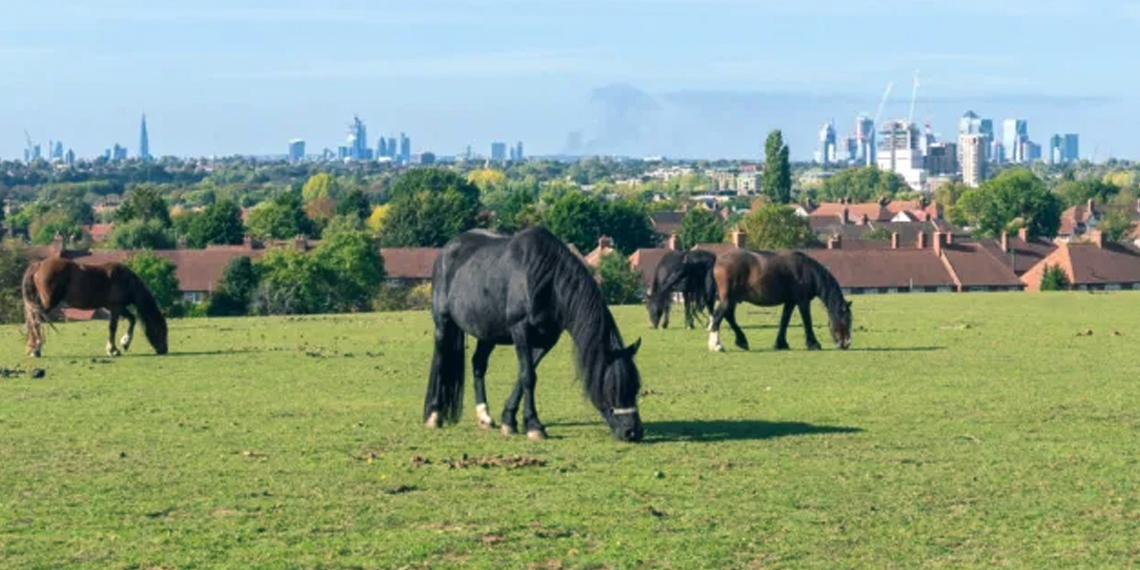
Mayor of London Sadiq Khan is set to unveil a significant shift in housing policy by proposing a redrawing of the capital’s green belt to enable the construction of 88,000 new homes annually.
This move forms part of an urgent strategy to address London’s escalating housing crisis.
During a scheduled speech in Greenwich, Khan will outline plans indicating that nearly one million additional homes will be needed over the next decade to meet growing demand.
The Mayor will make clear that relying solely on brownfield sites is no longer sufficient to meet housing targets and that parts of the green belt, particularly areas near public transport, must be considered for development.
Transport-linked green belt land in boroughs such as Bromley, Havering, Hillingdon and Enfield has been highlighted as prime for redevelopment.
These areas could see a wave of new housing projects designed to provide affordable homes for families and young professionals struggling with rising costs and limited availability.
Khan will also emphasise that brownfield development remains a priority, but current brownfield capacity is only supporting the delivery of around 40,000 homes each year—less than half the new annual target.
London is facing one of the worst housing shortages in the country, with over 90,000 children living in temporary accommodation. Councils are spending an estimated £4 million a day on emergency housing, while private rents in the capital jumped by 11.5% last year.
City Hall’s updated approach aims to strike a balance between protecting valuable green spaces and addressing a chronic shortage of homes. The policy would prioritise low-environmental-value green belt land close to infrastructure, where development could proceed with minimal ecological disruption.
The proposal has received backing from senior figures in central government, including the Deputy Prime Minister and the Secretary of State for Housing. Labour’s housing and planning minister has also expressed support for reassessing the green belt to unlock land for essential development.
However, countryside preservation groups have raised concerns. The Campaign to Protect Rural England (CPRE) warned that any reclassification of green belt land must be done cautiously, with long-term environmental impact in mind.
They argue that while reform is needed, the focus should be on improving the quality and use of land rather than opening it up to unchecked development.
The Mayor’s office is the first local government body to publicly support green belt reform in this way. The goal is to develop new housing in a strategic, planned manner that delivers long-term benefits for the city and its residents.
With demand for homes continuing to rise, Khan’s proposal marks a significant step toward increasing supply, easing pressure on rents, and helping more Londoners find secure, affordable housing without relying solely on existing urban spaces.
