
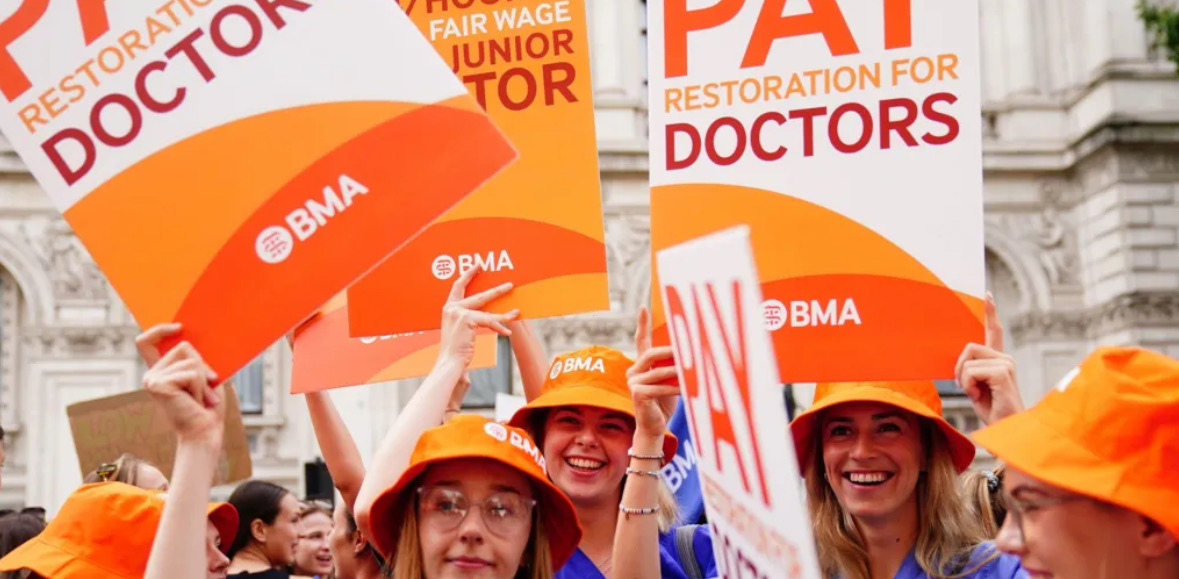
Doctors in England are considering strike action following the announcement of a 4% pay rise, which the British Medical Association (BMA) describes as insufficient to address long-term pay freezes.
The pay increase, effective from 1 April, has caused frustration among medical professionals who feel the rise does not compensate for nearly two decades of earnings lost to inflation.
Health Secretary Wes Streeting has defended the offer, noting that it exceeds the current inflation rate. Despite this, the BMA highlights that doctors’ pay is still around 25% lower in real terms compared to 16 years ago.
The union points out that the pay rise delays any meaningful restoration of doctors’ earnings without a clear government plan to reverse this decline. The likelihood of strike action is increasing due to the government’s position.
The BMA plans to hold a ballot among its members next week to decide on possible strike action.
Resident doctors, formerly known as junior doctors, will receive an additional £750 top-up, making their average pay rise 5.4%. These doctors staged multiple strikes in recent years, demanding a 35% pay increase to compensate for 15 years of below-inflation pay awards.
Although recent rises of around 22% over two years helped end previous strike action, the BMA believes this year’s pay offer is still inadequate.
Other NHS staff, including nurses and midwives, have been offered a smaller 3.6% pay rise, which has sparked anger among health unions.
The Royal College of Nursing describes the offer as disproportionate and likely to be completely eroded by rising living costs.
The RCN intends to consult its members on whether to accept the pay rise or pursue industrial action, with a formal strike ballot possible if the offer is rejected.
NHS staff in Wales and Northern Ireland are expected to receive similar pay awards, as their governments have accepted the same recommendations.
Health and Social Care Secretary Wes Streeting emphasises that while the government cannot undo 15 years of pay neglect immediately, this year’s and last year’s pay increases represent progress in recognising NHS staff’s contributions.
Inflation rose unexpectedly to 3.5% in the year to April, slightly higher than the predicted 3.2% for this financial year.
