
The UK is facing steeper US import tariffs than the European Union, despite former President Donald Trump’s vocal disdain for Brussels, according to new research by Capital Economics.
British exports to the United States are subject to an effective average tariff rate of 11.6%, surpassing the 9.5% faced by EU exporters. UK goods also encounter higher charges than imports from Mexico, Canada, India, Thailand, and Vietnam.
Analysts attribute this discrepancy to the specific makeup of the UK’s export portfolio, with major sectors exposed to additional levies introduced during Trump’s presidency.
While the UK faces a minimum blanket tariff of 10% – lower than the EU’s 20% – many British goods incur further product-specific duties, especially in the automotive and steel industries.
British Car Industry Bearing the Brunt
UK car exports, worth over £9 billion to the US last year and led by iconic brands such as Aston Martin and Jaguar Land Rover, are heavily affected by a 25% tariff on foreign vehicles. These duties pose a significant threat to Britain’s automotive sector, which remains the single largest contributor to UK-US goods exports.
In contrast, EU exports enjoy broader exemptions, particularly in pharmaceuticals – a category often excluded from tariffs entirely. The resulting carve-outs have significantly reduced the EU’s overall tariff burden, pushing their effective rate far below the headline figure.
Other countries have also negotiated favourable terms. Vietnam and India benefit from exclusions on electronic goods, while Canada and Mexico continue to enjoy preferential treatment under the United States-Mexico-Canada Agreement (USMCA).
Trump Praises UK Trade Push – But Tariff Threats Persist
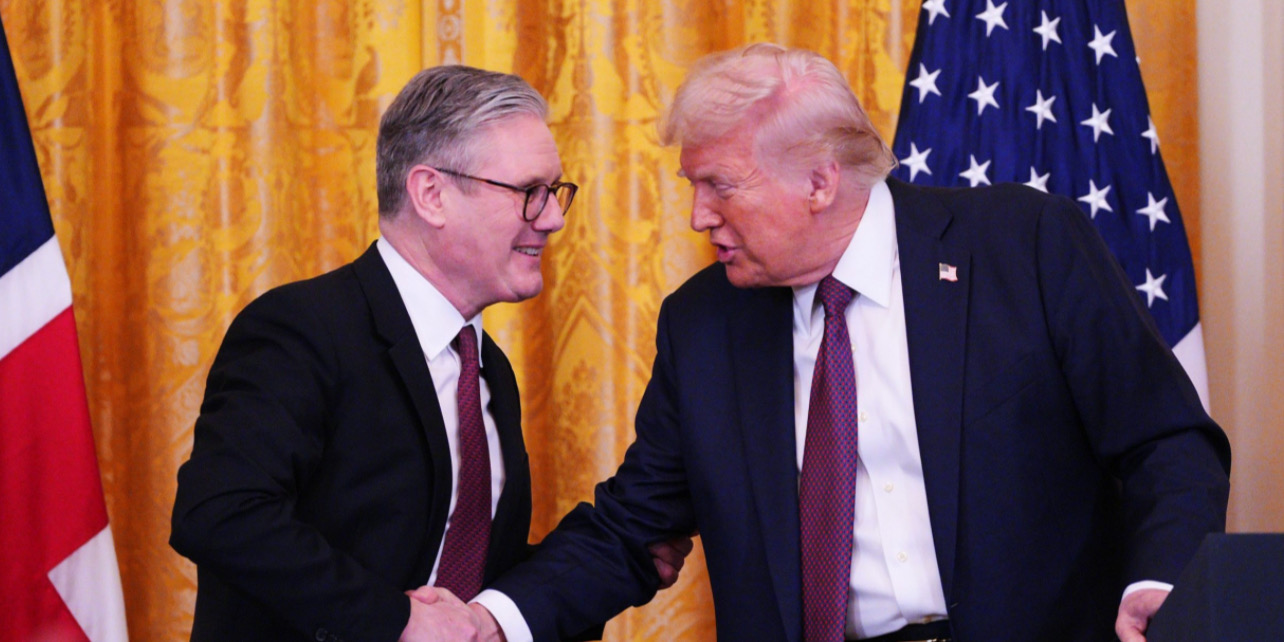
Despite his long-standing criticism of the EU, Trump has spoken favourably of the UK’s trade diplomacy under Prime Minister Sir Keir Starmer.
Following their February meeting, Trump said there was “a good chance” of a UK-US trade deal that would eliminate the need for tariffs altogether, adding that Starmer had “earned whatever the hell they pay him over there.”
However, concerns remain that Trump could impose a 100% tariff on foreign films, a move that would severely impact Britain’s £1.4bn film and TV production industry, which supports over 195,000 jobs.
Streaming giants like Netflix, Amazon, and Warner Bros have invested heavily in UK studios in recent years.
Philippa Childs, head of the Broadcasting, Entertainment, Communications and Theatre Union, warned such a policy would “deal a knock-out blow to an industry that is only just recovering” and threaten the livelihoods of thousands of freelancers across the UK.
UK Pushes for Trade Deal as Priority Status in Question
The UK Government is stepping up efforts to reach a bilateral trade agreement with the US in order to shield British industries from punitive tariffs.
Chancellor Rachel Reeves recently met her American counterpart, Scott Bessent, in Washington to advance negotiations.
However, reports suggest the UK is not currently a top-tier priority for the Trump administration, which is said to be focusing on Asian markets such as South Korea.
Business Secretary Jonathan Reynolds confirmed on Friday that “all options remain on the table” as the government concludes its consultation on US tariffs.
He stressed: “This is a new era for trade, and we must go further and faster to strengthen the UK economy and resolve these challenges with our US partners.”
Policy Architects Signal Window for UK to Secure Deal
Paul Dans, a senior figure behind Trump’s Project 2025 policy blueprint, indicated that now is the optimal time for Britain to secure a trade agreement.
Dans, a former Trump administration official, said: “President Trump wants to get to a yes on deals. I think Britons and Americans have shared many of the same struggles—deindustrialisation, immigration, societal disorder. It’s time to turn that shared experience into a shared opportunity.”