
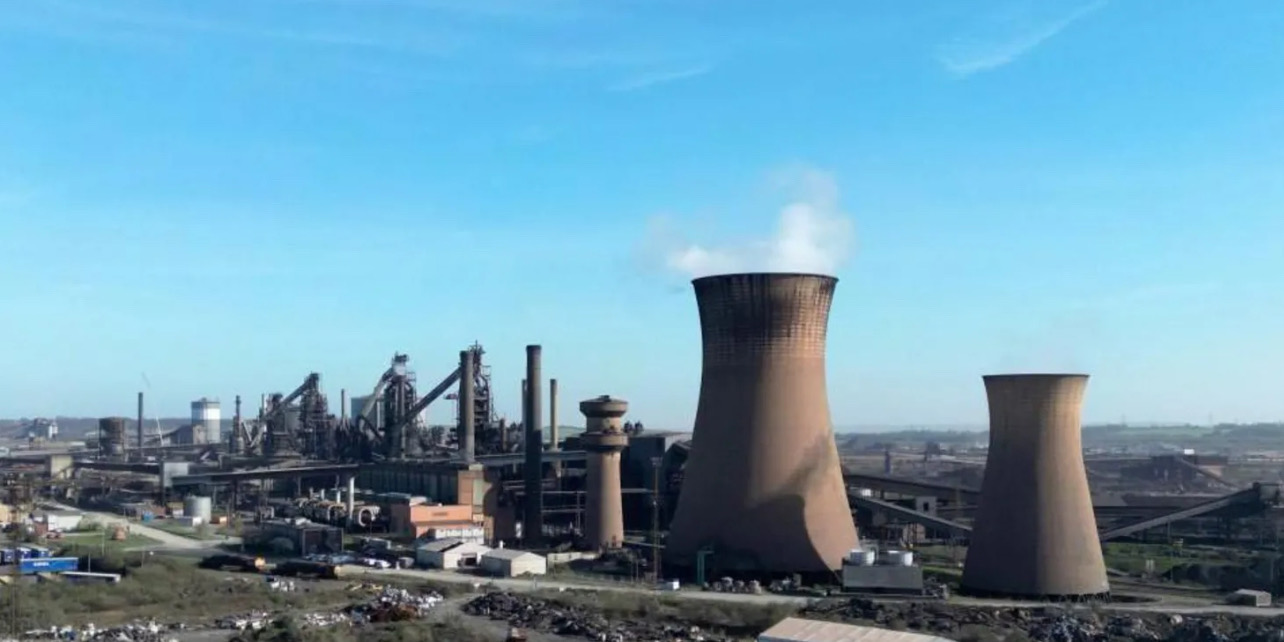
The UK Parliament has been urgently recalled for a rare Saturday session to pass emergency legislation aimed at preventing the shutdown of British Steel’s Scunthorpe plant, a move seen as critical to safeguarding thousands of jobs and the country’s steelmaking future.
Prime Minister Sir Keir Starmer confirmed that the emergency bill will allow the government to take control of the Scunthorpe site in Lincolnshire, as its Chinese owner, Jingye Group, signals plans to shut down the site’s blast furnaces, citing unsustainable financial losses. Starmer described the plant’s future as hanging “in the balance,” underscoring the national importance of maintaining steel production.
The emergency law, which ministers hope to pass in a single day, would give the government the power to ensure raw materials are delivered and to direct company leadership, even reinstating workers dismissed for defying shutdown orders. However, it stops short of authorising full nationalisation, which would require separate legislation.
UK Steel Industry at a Crossroads
Jingye, which acquired British Steel in 2020, claims to have invested £1.2 billion but is reportedly losing £700,000 daily due to market challenges, tariffs, and the costs of transitioning to greener production methods. It rejected a government offer of £500 million to convert to electric arc furnaces and declined a short-term deal to maintain operations through coal purchases.
The company’s refusal to continue production has drawn sharp criticism. Industry Minister Sarah Jones accused Jingye of not negotiating in good faith, stating that the situation had become existential, with raw materials running dangerously low. A senior government source has confirmed the business secretary no longer considers Jingye a trustworthy partner.
Union Support and Political Pressure Mount
Unions representing British Steel workers, including Unite, GMB, and Community, welcomed the move as a lifeline, warning that allowing the UK to become the only G7 country without primary steelmaking capacity would be a strategic failure.
Political leaders across party lines are calling for stronger action. The Green Party, Liberal Democrats, and Reform UK have all voiced support for nationalisation. Nigel Farage pledged to push for immediate public ownership, calling the government’s plan a “short-term sticking plaster.”
Conservative opposition figures, including Kemi Badenoch, criticised the government for mishandling the crisis, arguing that delays and mismanagement led to the eleventh-hour recall of Parliament. The sitting underscores the urgency, with Parliament only convening on a Saturday five times since World War Two.
The fate of British Steel now rests on the passage of the emergency legislation and the government’s ability to deliver a long-term industrial strategy that preserves UK steelmaking as a vital strategic asset.
