
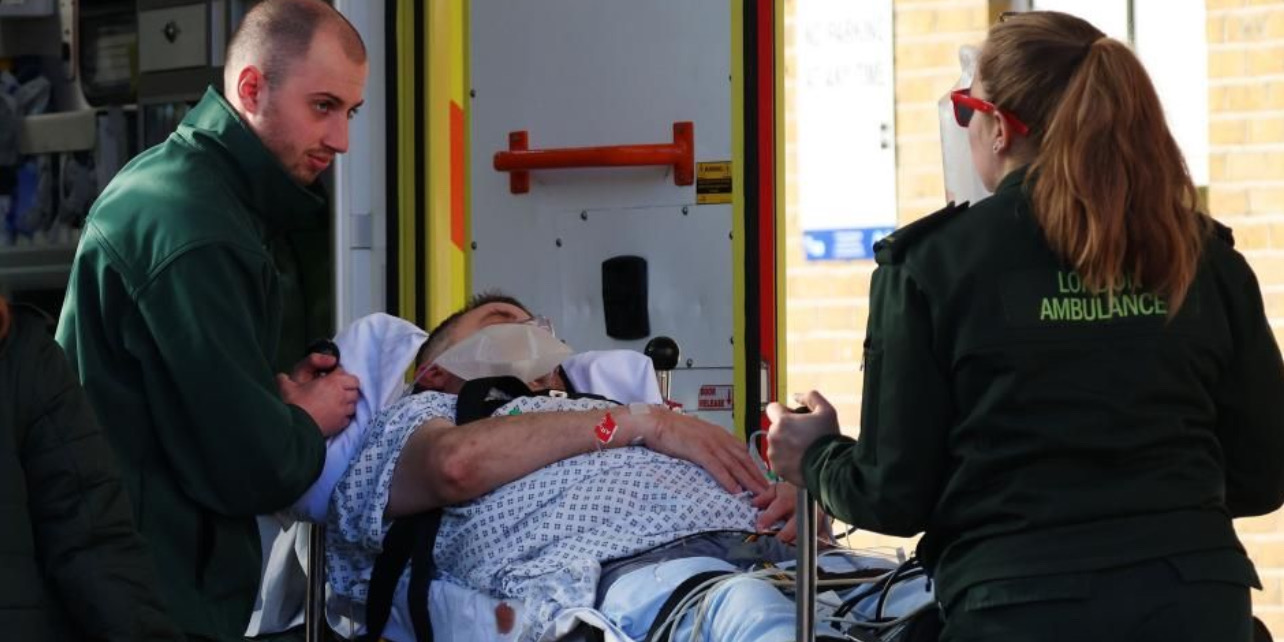
A prominent health think tank has warned that urgent and emergency care services in England are performing “significantly worse” than they were prior to the pandemic, highlighting deep-rooted problems within the NHS.
The Health Foundation has stated that the NHS was “in distress” this winter, with accident and emergency (A&E) waiting times reaching unprecedented levels.
The group argues that the situation cannot simply be attributed to higher cases of winter illnesses like flu.
The government is expected to publish a new urgent and emergency care strategy shortly. Meanwhile, the Department of Health and Social Care admitted that hospitals were “feeling the strain” but insisted it was taking “decisive action” to mitigate winter crises.
According to the Health Foundation’s winter report, the number of patients waiting 12 hours or more in A&E after being admitted for a hospital bed reached record levels — topping 60,000 cases in January, equivalent to 11% of emergency admissions.
The report also stressed the ongoing issue of delayed discharges, where medically fit patients remain in hospital beds, exacerbating bottlenecks in A&E departments and prolonging ambulance handovers. Delays were reportedly worse than in any previous winter.
Although the authors acknowledge that flu cases were higher than usual, they noted these figures were comparable to winter 2022–23, albeit with a slower decline.
Norovirus admissions also rose compared to many previous winters, while respiratory syncytial virus (RSV) levels remained similar to normal seasonal patterns, and Covid-19 admissions stayed relatively low.
Crucially, the report found that overall emergency hospital admissions and visits to major A&E units actually fell slightly compared to the previous year, suggesting the problems cannot simply be blamed on higher patient numbers.
Tim Gardner, assistant director at the Health Foundation, said the findings should serve as a “wake-up call” for the government, stressing that annual winter crises are not inevitable.
He warned that blaming external factors such as seasonal viruses risked offering “false comfort” about the true state of NHS services.
A spokesperson for the Department of Health and Social Care said: “Despite our efforts to protect patients this winter, including vaccinating more people than last year, hospitals are under pressure. However, annual winter pressures should not automatically result in an annual winter crisis.”
The department pointed to recent “decisive action”, including the ending of junior doctors’ strikes and the introduction of the UK’s first RSV vaccine.
The Royal College of Emergency Medicine responded to the report by emphasising that a “clear roadmap” for recovery exists, with the upcoming urgent and emergency care plan and the long-awaited 10-year NHS plan providing a “critical opportunity” for desperately needed reforms.
Separately, the Department of Health and Social Care announced that it had exceeded its target to allow patients to view appointments via the NHS app — achieving 87% coverage across hospitals by March, up from 68% last July.
It said that 12 million fewer letters had been sent and 1.5 million fewer appointments missed, helping to reduce waiting lists and deliver savings for taxpayers.