
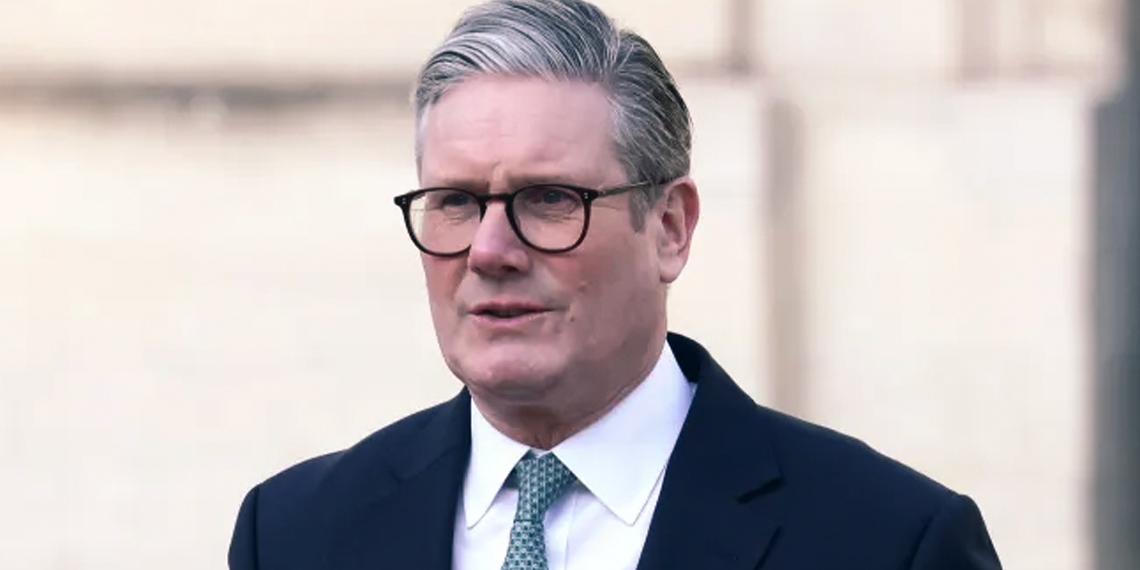
Britain will accelerate its increase in defense spending in response to the Ukraine crisis, Prime Minister Keir Starmer announced Tuesday, ahead of a critical meeting with US President Donald Trump in Washington. The UK defense budget will rise from 2.3% to 2.5% of GDP by 2027, increasing further to 2.6% the following year, amid mounting tensions over Europe’s security.
UK Boosts Military Budget as Ukraine War Fuels US-Europe Rift
Starmer emphasized that the accelerated defense spending was necessary due to escalating security challenges, notably related to Russia’s ongoing invasion of Ukraine. The Prime Minister described this as the “biggest sustained increase in defense spending since the Cold War.”
The announcement comes at a crucial moment, as Starmer prepares for talks with Trump, whose recent unilateral discussions with Russia, excluding Ukraine, have sparked concern across Europe. Trump has called on NATO members to dramatically increase their defense budgets, advocating a target of up to 5%.
Starmer Reaffirms US-UK Alliance Ahead of Washington Visit
During his announcement in Parliament, Starmer underscored Britain’s close relationship with the United States, calling it the country’s “most important bilateral alliance.” He expressed a commitment to strengthening ties with the US despite recent tensions over the future direction of the Ukraine war.
“President Trump thinks we should do more, and I agree with him,” Starmer noted, highlighting alignment with the US stance on greater European defense responsibilities. US Secretary of Defense Pete Hegseth praised the decision, calling it a “strong step from an enduring partner.”
Foreign Aid Cut Sparks Controversy and Criticism
Starmer revealed that the increase in defense spending would be funded through substantial cuts to Britain’s foreign aid budget, reducing international development funding from 0.5% to just 0.3% of GDP. This marks a significant drop from the 0.7% target set in recent years.
The decision drew immediate backlash from opposition MPs and international charities. WaterAid labeled the move a “cruel betrayal,” warning of severe impacts on vulnerable global communities. David Miliband, President of the International Rescue Committee, similarly condemned the cuts as “far-reaching and devastating.”
Long-Term Ambition Set at 3% of GDP
Looking ahead, Starmer set a longer-term ambition to raise defense spending to 3% of GDP in the next parliamentary term, beginning no later than 2029. However, he clarified that achieving this goal would depend heavily on Britain’s fiscal conditions at the time.
Despite widespread approval from defense officials and US allies, critics warn the funding increase alone will not reverse years of declining troop numbers, outdated equipment, and reduced combat readiness in Britain’s armed forces.
