
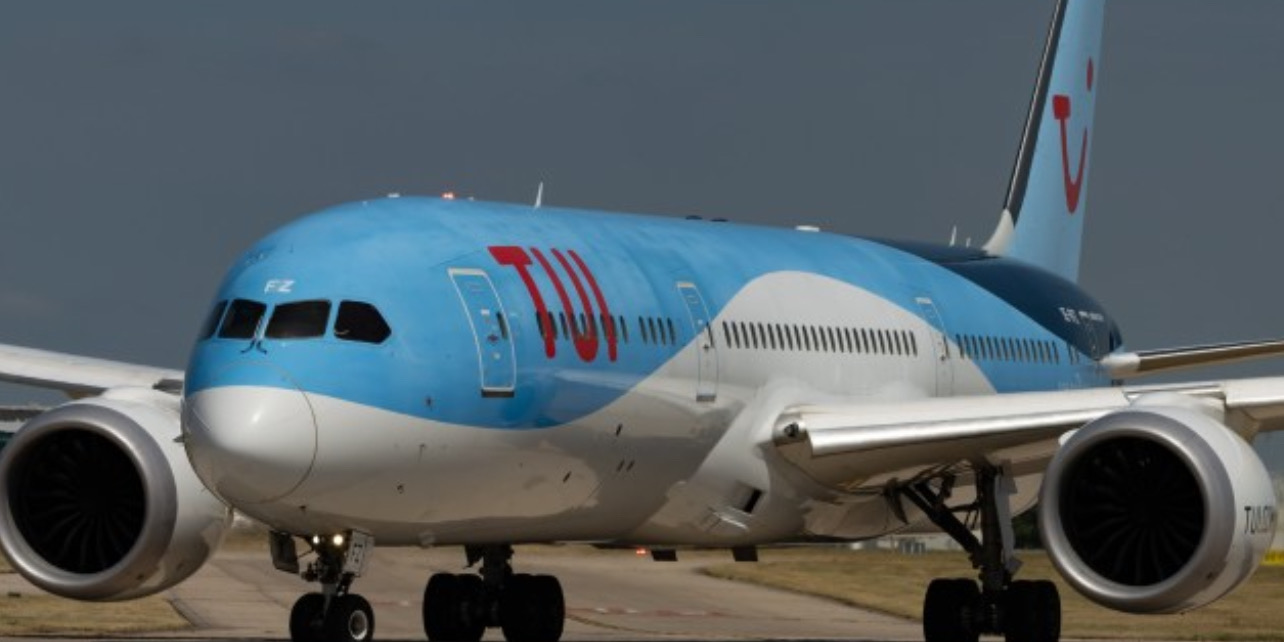
A TUI flight from Gatwick Airport was forced to make an emergency landing after two swans collided with the aircraft at 185mph, shattering the windscreen.
The Boeing jet, en route to Cape Verde, issued a mayday call shortly after takeoff when the birds struck, leaving blood smeared across the windows and damaging the aircraft’s electronic systems. The impact left the pilots unable to see out of the windscreen, requiring an escort back to the runway.
Bird strikes are a well-known hazard in UK airspace, with over 1,400 incidents reported in 2022 alone.
While most cases result in minimal damage, some have led to catastrophic failures, including engine fires and emergency landings.
In 2023, a Dubai-bound flight carrying 167 passengers was forced to return to Kathmandu after a bird strike caused one of its engines to burst into flames mid-air. Shocking footage captured the aircraft gliding through the sky while engulfed in flames.
A similar incident occurred in Colombia the same year when an Airbus A320-214 carrying 184 passengers suffered an engine fire after a bird collision.
Pilots Andres Dallimonti and Felipe Torres successfully executed an emergency landing at Gustavo Rojas Pinilla International Airport, averting disaster.
Bird strikes typically occur during takeoff and landing, when aircraft are flying at lower altitudes. Large birds like geese and swans pose the biggest risk, as their size and weight can cause serious structural damage and engine failure.
Aviation authorities continue to implement measures to reduce bird strike risks, including radar systems, habitat management around airports, and bird deterrents.
